Longevity scales bring together weight measurements, calculated body composition and commercial scores: each output needs its own interpretation. Seeing fat, muscle and heart age on one screen does not mean they were all measured directly or that they tell you how long you will live.
Perhaps you want to follow a change in habits and encounter equipment promising a complete health check. Before paying for extra indicators, it helps to understand what it captures, how it has been tested and what you would do about an unexpected reading.
What does a smart scale actually measure?
When you step on barefoot, the platform records weight and electrodes collect an electrical signal. Withings' technical explanation separates that bioimpedance from the algorithm, which combines age, height and other personal information to calculate fat or muscle. These are different stages of the same process.
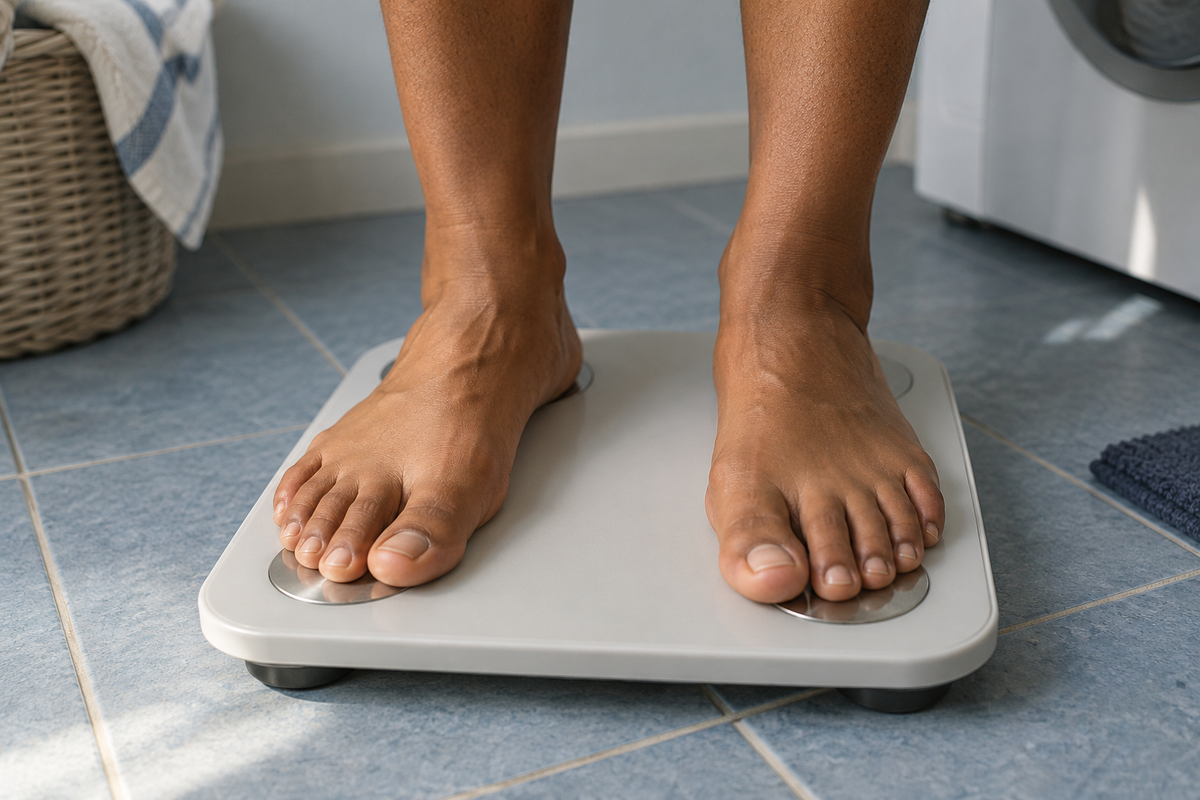
Weight represents the total load resting on the platform; body fat is obtained after applying equations. Changes to your profile, electrode contact or conditions of use affect interpretation. Lean mass also differs from muscle, because it includes water and other tissues.
As you read the specifications, separate three categories: recorded quantities, calculated composition and scores combining several variables. Manufacturers use the label “biomarker” for outputs from these different categories. Adding them together describes the breadth of the dashboard, rather than how many independent health tests you have completed.
A scale displaying one or two decimal places offers a particular display resolution. Accuracy means knowing how far it deviates from the comparison method; repeatedly producing a similar reading describes consistency. Those properties need to be assessed separately for each function, rather than inferred from the number of digits shown.
What did the comparison with DXA find?
In a French hospital study published in 2021, Frija-Masson and colleagues compared three models with DXA in groups of 53, 52 and 48 adults respectively. Each participant underwent both assessments during the same visit, without longer follow-up.
All three scales underestimated fat mass
Median fat-mass difference
Scale minus DXA; negative values indicate lower calculated fat mass.
The researchers found closer agreement for weight than for body composition. The key limitation for a purchase today is that they tested older devices in hospital patients, so their findings neither validate nor rule out the new BodyScan 2. These differences compare methods, rather than weight changes over the course of a treatment.
For the model you are considering, that question remains open until a relevant comparison is available. The exact device, the people studied and the size of individual errors all matter. A paper about an earlier generation provides background while leaving this particular assessment outstanding.
Does high correlation prove accuracy or longevity?
The European BodyScan 2 page advertises 99% correlation with DXA, attributing this to an internal comparison involving Body Scan. High correlation describes how closely two sets of numbers vary together. Agreement also matters: how far apart the methods are when assessing the same person.
A body composition test answers a question about body composition. Claiming that using a dashboard extends life would require research into that outcome, including follow-up and an appropriate comparison. The product's “longevity” label does not supply that clinical finding.
In its Glucose Resilience documentation, the manufacturer describes combining visceral fat and nerve response into a wellness score. It neither measures nor estimates blood glucose, and is not intended to diagnose diabetes. Reading it as a blood test after eating would give the system a different purpose from the one described.
How can you compare readings at home?
NHS England recommends using a firm, level floor, weighing at a similar time and wearing similar clothing. A carpet or unstable position introduces different conditions. Keeping the usual location makes entries from different weeks easier to compare.
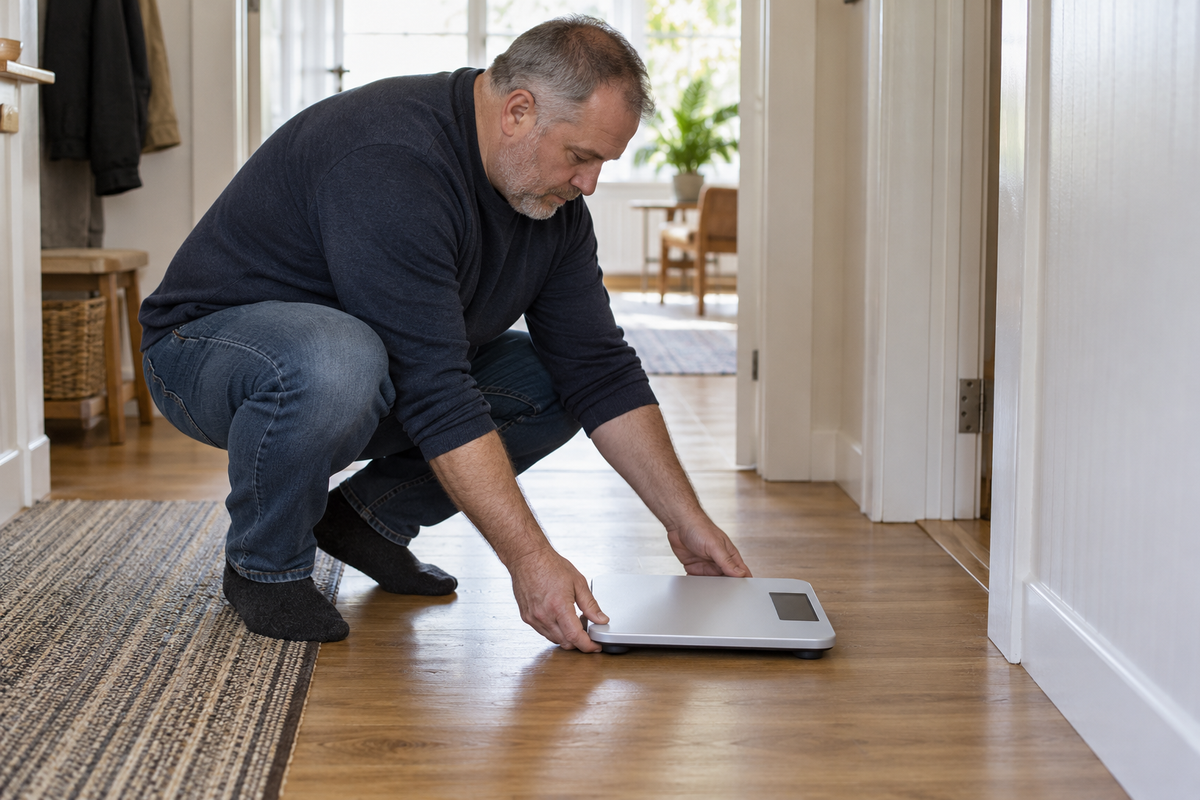
Choose an interval that answers your particular aim; that service suggests weekly to monthly weighing within its programme. When you receive clinical support, agree the frequency with the person overseeing it. Stepping on repeatedly to obtain a more favourable percentage creates another experience, centred on constant checking.
Note anything that helps explain an unusual reading, such as moving the device or switching profiles. Following the model's instructions supports repeatability, although a uniform routine cannot remove algorithmic error. Your notes then preserve the circumstances surrounding the weigh-in, alongside the recorded result.
Which findings change a health decision?
NICE guideline NG246, updated in 2026, retains BMI as a practical clinical measure of general adiposity and advises against replacing it with bioimpedance. For adults with BMI below 35, it adds waist-to-height ratio to assess central adiposity. This places the household percentage within a broader assessment.
If you develop unintentional weight loss, weakness or new symptoms, the consultation should focus on what is happening to you. A fat and muscle report supplies additional information for that conversation. A favourable heart age also cannot replace assessment of symptoms or establish that treatment is working.
Food calls for different questions: what you eat, how much, how regularly and how you feel. The article on fibre and protein distinguishes nutrients that a scale cannot identify in your meals. Changing what you eat requires more information than the colour of a dashboard tile.
If fear of gaining weight leads you to restrict meals or weigh yourself compulsively, discuss it with a professional. The NHS lists these behaviours among signs of an eating disorder. Worry that interferes with everyday life is also a reason to seek support, even when the dashboard looks reassuring.
What does it cost in the United Kingdom?
In the UK, the official shop sells BodyScan 2 online for £449.95, with delivery to the selected country, as of 12 October 2026. Its optional Withings+ offer shows one free month for new subscribers, followed by £89.50 annually or £8.95 monthly, with automatic renewal. The device works without that subscription.
The estimated outlay for the hardware plus one paid annual term is £539.45: £449.95 + £89.50. This separates the purchase from the billed period following the free trial. Heart Age and Glucose Resilience are tied to Withings+, so check which screens will remain available after cancellation.
The same manufacturer offers Body Smart for £89.95, with basic metrics and trends available without a compulsory subscription. It is a lower-cost option for household tracking, without assuming it reproduces the premium model's functions. Starting with the task you need avoids paying for menus you will leave unopened.
The UK product page calls its blood-pressure feature Blood Pressure Insights and states that it has not received medical device certification there; it is a wellness feature, does not measure blood pressure, and notifications require confirmation with a validated monitor. Public funding for this particular consumer purchase is not established here: ask your local NHS service, allowing for differences between the four nations.
What can you decide before buying?
A notebook lets you bring together your initial question and tracking conditions before activating an account. Recording food is a separate task: apps that analyse meal photographs need details of the plate that body weight cannot supply. Keeping the two records separate avoids attributing everything seen the next morning to one dinner.

- Define a specific question, such as following weight over an agreed period, and write down when you will assess the notes.
- Check which indicators are measurements, calculations or scores, and which publication evaluates that exact model.
- Add the purchase price and subscriptions you will actually take out; keep the renewal and cancellation conditions.
- Prepare a stable location and repeatable weighing conditions, using the manufacturer's instructions.
- Agree with your clinician which changes to discuss and when to pause checking if it causes distress.
Your eventual choice depends on the question you want answered and the budget you accept maintaining. Your options include a simple record, a clinical assessment or additional functions whose purpose you understand. Before buying, identify the sections you will consult and who will clarify uncertainties when an alert appears.
Sources and references
- Withings. n.d. The Science Behind Body Pro 2 — Body Composition.
- Frija-Masson J, Mullaert J, Vidal-Petiot E, Pons-Kerjean N, Flamant M, d’Ortho MP. 2021. Accuracy of Smart Scales on Weight and Body Composition: Observational Study. JMIR Mhealth Uhealth. 9(4):e22487. doi:10.2196/22487.
- Withings. n.d. BodyScan 2.
- Withings. n.d. Glucose Resilience.
- NHS England. n.d. How to Record Your Weight.
- Withings. 2026. BodyScan 2 — Product Guide.
- NICE. 2026. Overweight and obesity management — NG246, 1.9.
- NHS. n.d. Symptoms — Anorexia nervosa.
- Withings. n.d. BodyScan 2.
- Withings. n.d. Body Smart.
Understand what you eat with Calegg
Analyze your meal and check its details in seconds.
Also on iPhone and iPad, in your browser. No download needed.