You point the camera at your plate, wait a few seconds, and a number appears: 624 calories. It feels almost like magic, especially if you have ever weighed rice, looked up ingredients one by one, and calculated how much oil was in a recipe. Apps that estimate calories from a photo promise to turn that chore into an everyday gesture. They can save time and help you observe habits, but the number they display does not come directly from the food: it is the result of several chained estimates. Understanding that difference allows you to make the most of them without granting them a precision they do not yet have.
How an app calculates calories from an image
A photograph contains no nutritional information. It contains pixels: shapes, colors, brightness, and spatial relationships. The app uses computer vision to transform those pixels into hypotheses about what is on the plate. First, it locates the areas that look like food; then it tries to separate, for example, the rice from the chicken and the salad. Next, it classifies each element by comparing it to patterns learned during its training.
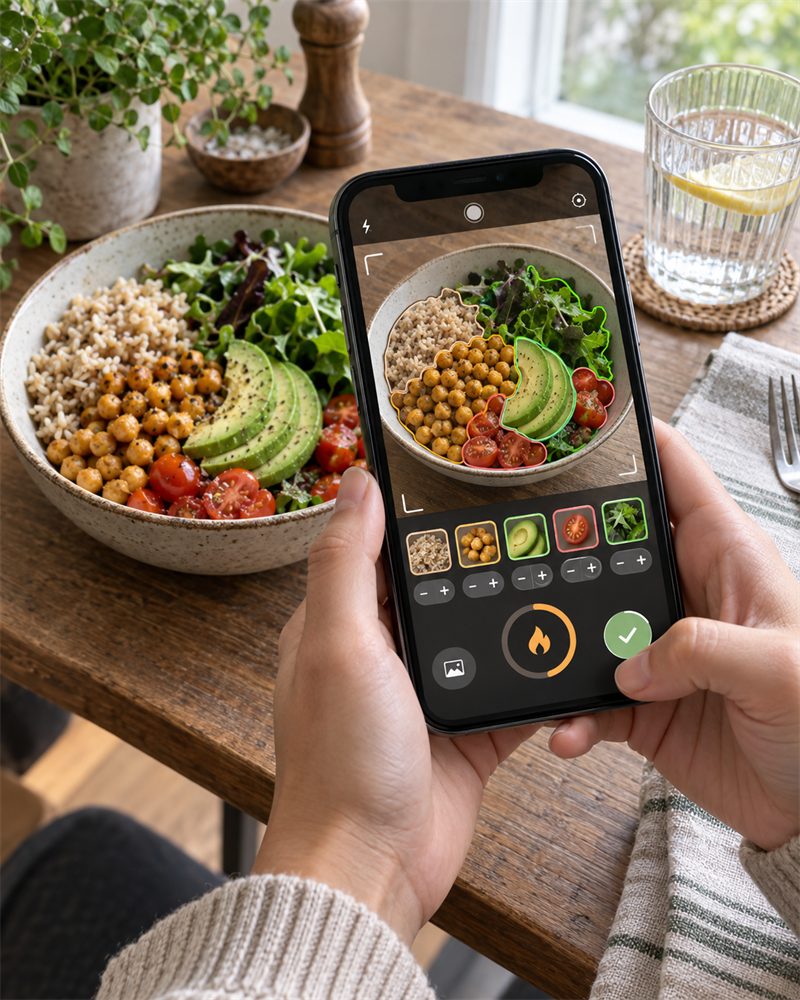
Recognizing the food is only the beginning. To calculate energy, the system needs to estimate how much of it there is. It can infer volume using the apparent size of the plate, the geometry of the foods, the perspective, and in some cases, a known reference or multiple images. Then it converts the approximate volume into weight and looks up an equivalent food in a nutritional composition database. Each decision introduces uncertainty: confusing sweetened yogurt with plain, interpreting 150 grams as 220, or choosing a different database entry changes the final result.
The most sensible systems do not hide this process. They propose foods and amounts, but allow the person to confirm, delete, or add elements. That interaction is not a flaw; it is an essential part of the measurement. Systematic reviews of image-based food recognition systems describe precisely this chain: segmentation, classification, volume estimation, and association with nutritional data.
Why a salad can be more deceiving than an apple
Simple and recognizable foods offer fewer room for error. A whole apple or a barcoded can have a relatively clear identity. A curry, a lasagna, or a dressed salad hide decisive information. Two almost identical dishes can differ greatly if one contains more oil, cheese, nuts, or a dense sauce. The camera also cannot tell if chicken is fried or roasted when the visible surface is similar.
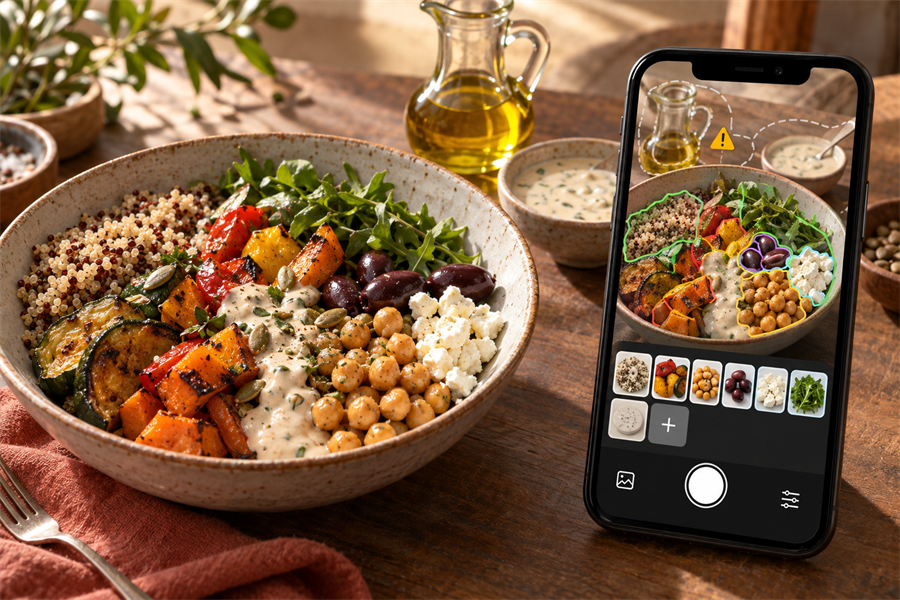
Portion size adds another problem. A flat image loses depth and scale; a small bowl close to the camera can look larger than a big one placed further away. Amorphous foods, such as purees, pasta, rice, or stews, do not have a stable shape that makes calculation easy. Even trained specialists improve when they have references and practice, a sign that the problem is not solved solely by recognizing the name of the dish.
The database also matters. After identifying "pizza," the app still has to decide which pizza best represents the image. A homemade recipe, a frozen one, and a restaurant one can have different energy densities and salt amounts. Databases like FoodData Central gather several types of records because there is no single universal value for each food name. An app with many results is not necessarily more accurate if it selects the wrong record.
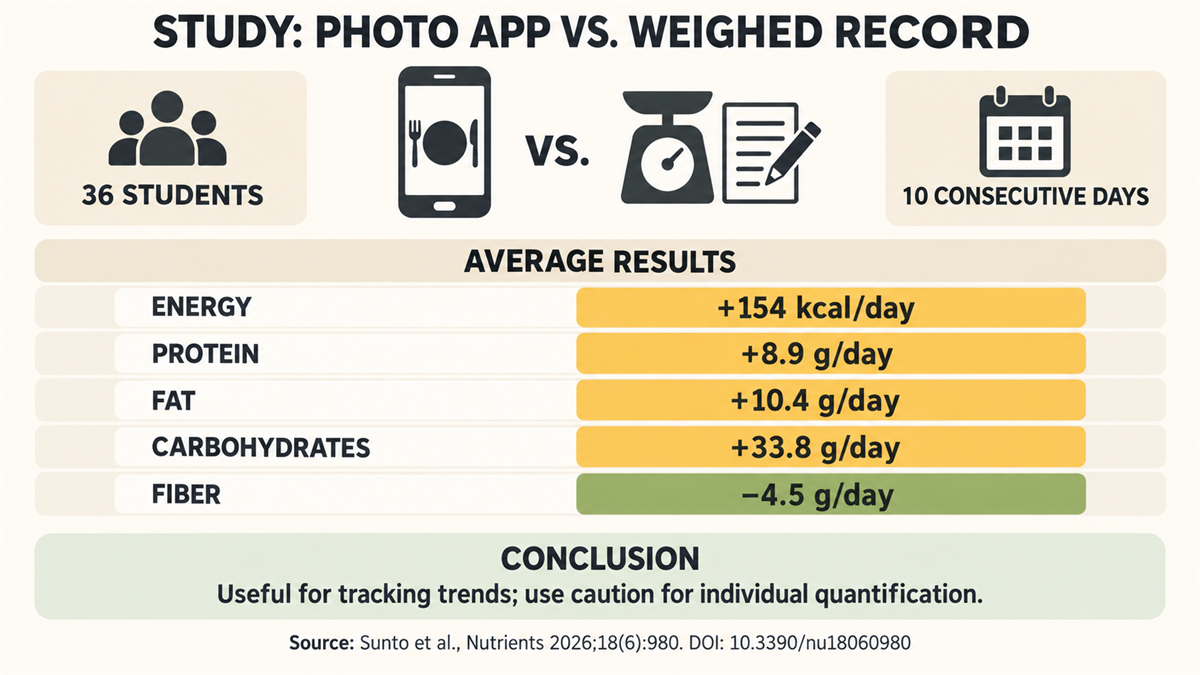
Recent evidence reflects this variability. A 2026 study compared a meal recognition tool with weighed food records over ten days. It found moderate agreement, but also systematic overestimation of energy and macronutrients, and underestimation of fiber. That does not render the tool useless; it indicates that a specific figure should be read with a margin, especially at an individual level.
What these apps are actually useful for
Their main advantage is reducing friction. Manually logging a meal can require several searches and decisions; taking a photo and correcting two or three suggestions is usually much more manageable. That ease matters because an imperfect yet consistent log can reveal patterns that a food diary abandoned on the third day never will.
Trends are usually more informative than the number for a single meal. After several weeks, you may discover that vegetables rarely appear at dinner, that snacks are concentrated on stressful days, or that breakfast protein is scarce. You can also remember what you ate with greater precision when talking to a dietitian. In studies with image-assisted apps, many users value convenience precisely, even though human intervention is still necessary to confirm foods and portions.
It helps to change the question. Instead of asking, "Does this plate have exactly 624 calories?", it is more useful to ask, "Have I logged this similarly to other days, and does the trend make sense?" The first demands an accuracy that the image rarely provides; the second takes advantage of the method's consistency. For comparing weeks, repeating a logging method can be more valuable than chasing a false decimal precision.
How to get a more useful estimate with every photo
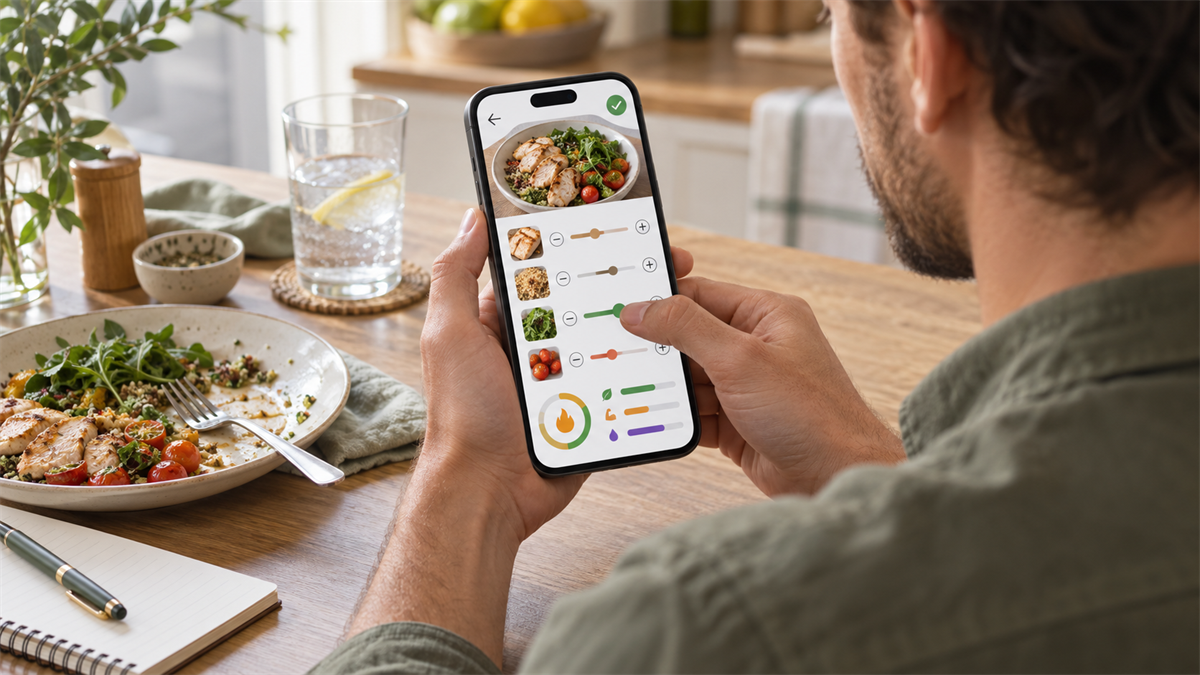
Start by taking the photo before eating, with the entire plate visible and good lighting. Keep a reasonable distance and avoid a completely sideways angle, which hides quantities. If the app supports a second image or a size reference, use it. Visually separating sides and ingredients also helps: a bowl with distinguishable components offers more information than a mixture covered in sauce.
Then, always review the suggestion. Correct the food type, preparation, and portion; add drinks, bread, oil, sauces, and seconds. For homemade recipes, a recipe builder is usually more reliable than guessing the finished dish: you enter the ingredients once and divide the total by the actual servings. If you know the weight of a particularly energy-dense food, noting it down prevents the entire estimate from depending on perspective.
Do not continually change your database or criteria for estimating portions. Consistency makes it easier to interpret your progress. And perform occasional checks: weigh some common foods for a day or two and compare them with what you usually log. You don't need to turn every meal into an experiment; it's enough to calibrate your intuition every now and then.
How to choose an app without getting carried away by the demo
A good scanning animation proves that the interface is attractive, not that the estimate is valid. Look for the ability to edit all results, specify everyday units and grams, create recipes, and check where the nutritional data comes from. Check if the database includes common products and dishes from your country. History export can be important if you want to share it with a professional or switch services.
Also review privacy before routinely uploading photographs. Find out if images are saved, for how long, if they are used to train models, and how you can download or delete your data. A photo of food seems innocent, but a complete history can reveal schedules, locations, preferences, restrictions, and health-related aspects. Control options should be understandable, not hidden behind a generic promise of personalization.
Be wary of phrases like "total accuracy" or "metabolism optimized with a photo" if they do not explain the validation method. Ask what reference the app was compared against, with which meals, in which population, and whether the result depended on human corrections. A recognition score on laboratory photographs does not equate to correctly calculating the calories in your dinner.
Conclusion: a compass, not an invisible scale
Apps that measure calories with a photo can make logging food faster, more visual, and more sustainable. Their best function is not to dictate an exact truth about every dish, but to help you remember, compare, and detect patterns. Quality improves when you photograph well, correct suggestions, and add what the camera cannot see.
Use them like a compass: they are useful for orienting yourself, but they do not replace a measurement when precision matters. If the experience helps you eat with more mindfulness and less effort, the technology is fulfilling its role. If it generates anxiety, obsession, or improvised medical decisions, it is worth setting the figure aside and asking for human help.