Having less appetite might seem like the complete solution, but in reality, it only changes part of the conversation. GLP-1-based treatments are prescribed for specific clinical situations and can alter appetite, feelings of fullness, and the rate at which food leaves the stomach. This can help some people eat less, but it does not make just any choice sufficient, nor does it reveal, through an isolated number, how the body is functioning.
The practical question is different: how do you maintain a varied and tolerable diet when regular portions are no longer appealing? To answer this, it is helpful to observe three layers at once: food quality and density, digestive symptoms, and what happens to strength and body mass. An application can organize this record to discuss with the healthcare team, but it does not replace a consultation, diagnosis, or decisions regarding treatment.
This article serves to prepare for that conversation. It does not recommend starting, stopping, or changing a medication, dose, or prescribed dietary guideline. If you have a medical condition, are pregnant, breastfeeding, or following a therapeutic diet, your priorities must be reviewed on an individual basis.
Less appetite does not mean fewer needs
The feeling of satiety arrives sooner, but the needs for fluids, vitamins, minerals, fiber, and protein do not disappear by decree. When food volume decreases, each bite may provide less energy and, at the same time, be an opportunity to include foods that were previously pushed aside. There is no need to turn this idea into a gram chart: what matters is what you can eat, what you tolerate, and what pattern repeats over several days.
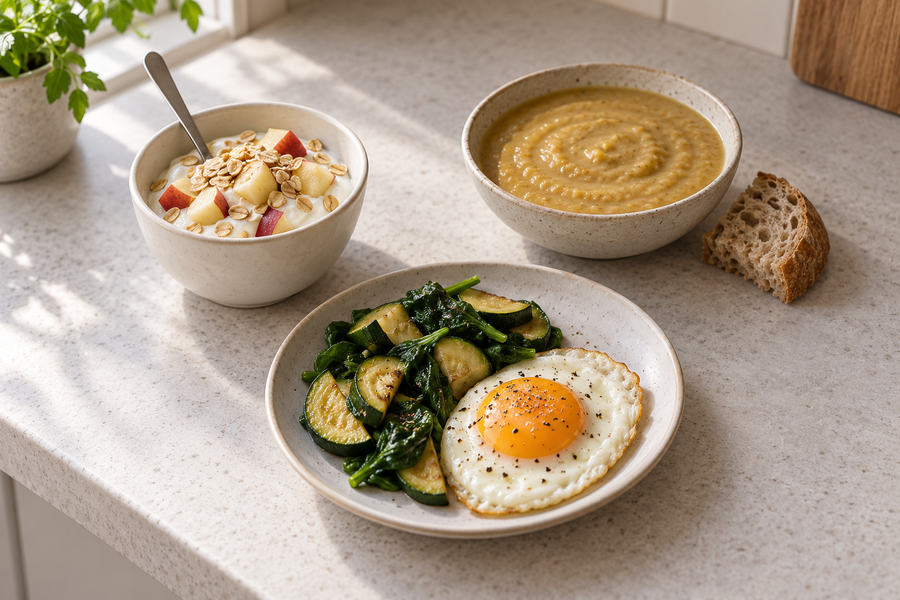
A small meal can bring together a protein source, a vegetable item, and a food that provides carbohydrates or fiber. Plain yogurt with fruit and oats, a legume cream with bread, or an egg with vegetables are possible combinations, not mandatory menus. There may also be days when a liquid texture feels more comfortable or when it is convenient to split intake into smaller portions. The choice depends on personal preferences, health, food culture, and the professional's indications.
The joint consensus of nutrition and obesity organizations suggests reviewing habits, medical conditions, risk of deficiencies, strength, and body composition. It is not about chasing a "perfect" food, but rather about detecting whether the decrease in appetite is leaving out entire food groups.
Digestive tolerance and rhythm: observe before forcing
Nausea, early satiety, reflux, diarrhea, or constipation can appear with these treatments, and they are not experienced the same way by everyone. The goal is not to endure in silence or eliminate foods based on an internet list. It is much more useful to note when the symptom appears, the approximate amount eaten, how much fluid was consumed, and whether the discomfort prevented you from continuing your normal activity.
Eating slowly, taking pauses, and choosing tolerable textures are observations to discuss with a professional. Some people find it helpful to divide their meals; others prefer simple preparations. There is no universal sequence. The NIDDK reminds us that side effects and response should be reviewed with the prescribing team.
Tracking is not a test of obedience. If a soup is better tolerated than a dry dish, it guides a conversation, but it does not prove that the soup is necessary nor does it diagnose an intolerance. A photo does not reveal all the ingredients either.
The warning signs are persistent or intense symptoms, not a small meal. Repeated vomiting, inability to keep fluids down, significant pain, dizziness, or dehydration require contacting the healthcare team; in case of an emergency, seek immediate care. An app remembers dates; it does not classify severity.
What monitoring lean mass means
Total weight summarizes far too much. When losing weight, fat, water, and fat-free tissues usually change in proportions that cannot be inferred from a home scale. "Lean mass" includes muscle, but also water, organs, and other tissues; therefore, it should not be automatically translated as "lost muscle." Strength, function, and body composition answer different questions.
The STEP 1 body composition substudy illustrates this nuance. In the main trial, 1,961 adults with overweight or obesity, without diabetes, were randomly assigned to semaglutide or placebo along with a lifestyle intervention for 68 weeks. A subgroup of 140 people underwent DXA measurements: 95 received semaglutide and 45 placebo. In that subgroup, body weight decreased by 15.0% with semaglutide versus 3.6% with placebo; total fat mass decreased by 19.3%, regional visceral fat by 27.4%, and lean body mass by 9.7%. The proportion of lean mass within total weight increased by 3.0 percentage points.
The correct interpretation is not that the treatment "eats" muscle or that it protects it completely. It is that the loss was greater in fat, but there was also an absolute decrease in lean mass in that exploratory analysis. DXA also does not identify what part of that mass was muscle. For this reason, consensus suggests observing strength, function, resistance activity, and diet quality on an individual basis, without promising that a single marker will resolve the issue.
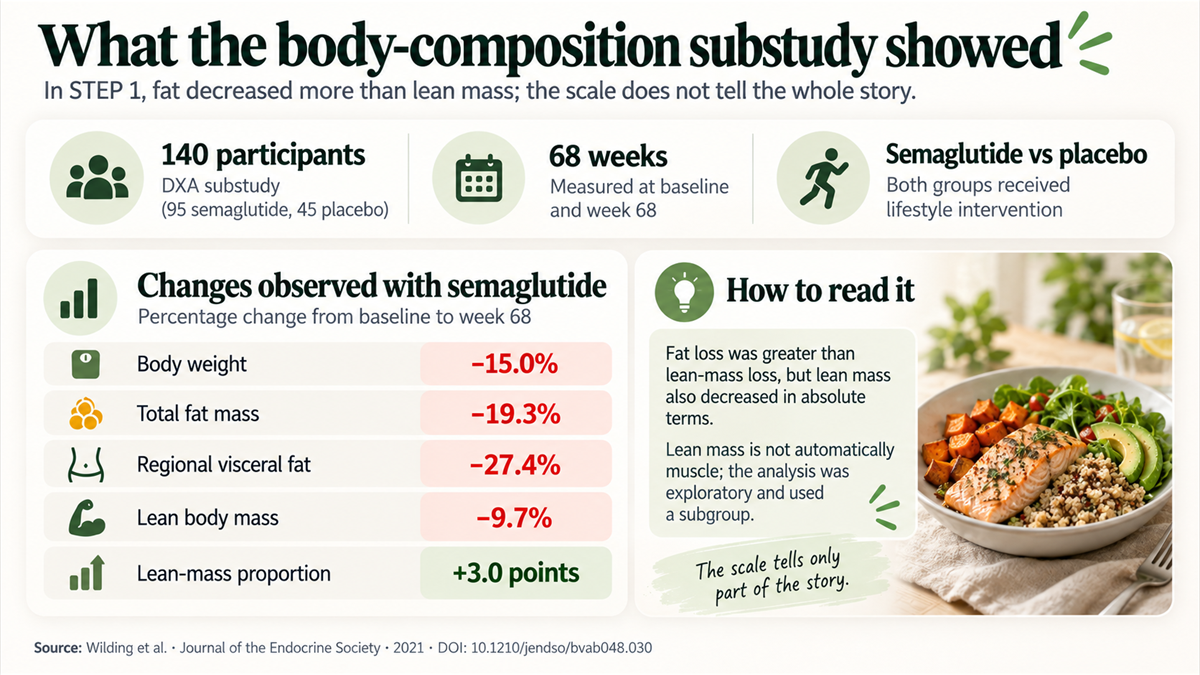
The infographic separates the trial result from editorial interpretation. Furthermore, its percentages describe relative changes from baseline and are not a prediction for everyone. The substudy sample was smaller than that of the full trial, measurements were taken at two time points, and one cannot deduce from them which individual nutritional strategy will work best. The data help formulate questions: How is strength being maintained? Are there meals that are better tolerated? What follow-up does the team propose?
Log to converse, not to obey
A food diary is most useful when it preserves context. You can note the approximate time, what foods appeared, a conservative estimate of the amount, drinks, symptoms, bowel movements, perceived energy, and physical activity. You don't need to measure everything or fill the day with zeros when records are missing. A partial week describes a partial week.
Photos can remind you what was on the plate, but they don't weigh the food or uncover hidden ingredients. If an app estimates nutrients from an image, review the proposal, correct the portion when you know it, and mark the uncertainty. A figure with many decimals is not more clinical just because it is more precise on screen. The log should facilitate a conversation, not become an order of what to eat or stop eating.
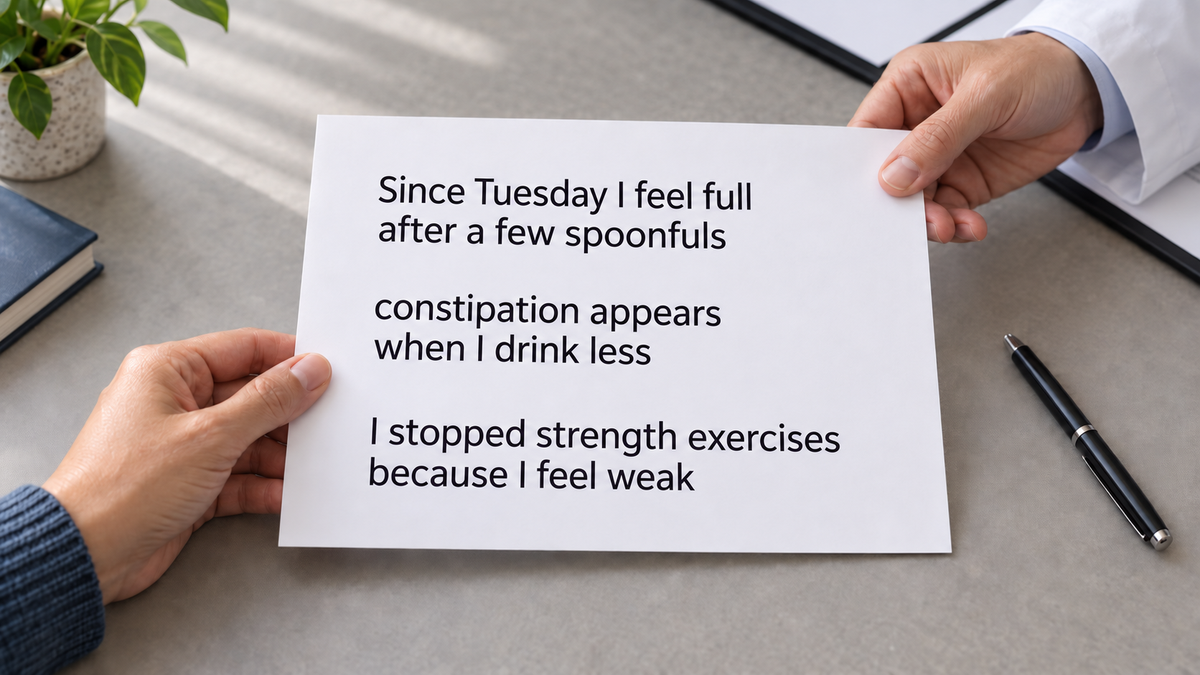
Save concrete questions: “Since Tuesday I feel full after just a few spoonfuls,” “constipation appears when I drink less,” or “I have stopped strength training because I feel weak.” They connect data and experience. The professional decides what to explore. Avoid weighing yourself several times a day if it increases anxiety; the frequency should serve your clinical goal.
A flexible pattern protects quality
When appetite changes, variety can be sustained with small, repeatable decisions. Alternate sources of protein that you tolerate—legumes, eggs, fish, dairy, or plant-based alternatives—with vegetables, fruit, whole grains, and culinary fats according to your preferences. You don't need to include all food groups in every meal or buy products "for GLP-1." Quality is seen in the multi-day pattern, not in a single perfect meal.
Fiber deserves special mention because it can help with bowel function, but increasing it suddenly when constipation or nausea are already present can worsen the experience. The NIDDK recommends adjusting fiber gradually and accompanying it with fluids, taking clinical instructions into account. If you have kidney disease, fluid restrictions, an ostomy, or another condition, consult before modifying it.
The 2025 consensus also mentions aerobic activity, strength exercises, sleep, and professional support. These are complementary pieces, not a to-do list. If fatigue or symptoms prevent you from moving, note it and discuss it. Do not compensate for a small meal with intense exercise or use the log to justify medication changes.
Conclusion: Less appetite demands more context
A GLP-1 treatment can change how much you feel like eating, but it does not turn nutrition into a matter of willpower or a calorie counter. Monitoring quality, tolerance, hydration, strength, and body mass paints a more honest picture than the scale alone. The STEP 1 substudy reminds us that losing more fat than lean mass does not mean lean mass remains unchanged.
Track what you can explain, correct what the app estimates, and bring any questions to the team that knows your history. A small meal can be enough, insufficient, or different depending on the person and the moment. Safe decisions stem from shared monitoring, not a universal template.
Sources and References
- Mozaffarian et al. 2025. Nutritional priorities to support GLP-1 therapy for obesity. The American Journal of Clinical Nutrition, 122(1), 344–367. DOI: 10.1016/j.ajcnut.2025.04.023. Consensus on nutritional assessment, digestive symptoms, body composition, and lifestyle support.
- Wilding et al. 2021. Impact of Semaglutide on Body Composition in Adults With Overweight or Obesity: Exploratory Analysis of the STEP 1 Study. Journal of the Endocrine Society, 5(Suppl 1), A16–A17. DOI: 10.1210/jendso/bvab048.030. Primary publication of the DXA substudy and its limitations.
- NIDDK. Prescription Medications to Treat Overweight & Obesity. Information on clinical indication, combination with habits, and side effect review. Accessed September 18, 2026.
- NIDDK. Eating, Diet, & Nutrition for Constipation. Guidance on gradually increasing fiber, fluids, and professional consultation. Accessed September 18, 2026.
- NIDDK. Insulin, Medicines, & Other Diabetes Treatments. Context on how GLP-1 receptor agonists can influence hunger, gastric emptying, and side effects. Accessed September 18, 2026.
- FDA. FDA’s Concerns with Unapproved GLP-1 Drugs Used for Weight Loss. Risks of unapproved products and recommendation to consult professionals regarding medication. Updated in 2026.
- DailyMed / National Library of Medicine. WEGOVY: ficha e instrucciones oficiales. Accessed October 6, 2026. Visual reference of the capped pen for the header illustrative scene; no dosages or administration are depicted.