Few health trends have generated as much debate in recent years as intermittent fasting. It's mentioned at work, at the gym, on wellness podcasts, and even at family gatherings. But what is it really about? Is it a revolutionary diet, a trendy trick, or simply a different way to organize the hours we eat? This guide answers all these questions as clearly as possible, without medical jargon or exaggerated promises.
What Exactly Is Intermittent Fasting?
Intermittent fasting is not a diet in the traditional sense of the word. It doesn't tell you what to eat, but rather when to eat. The central idea is very simple: alternate periods when you do eat with periods when you eat nothing (or almost nothing).
Stated like that, it might seem strange, but if you think about it, we all fast every day: the hours we spend sleeping are, technically, a fast. Intermittent fasting simply extends that non-eating window a bit, either by shortening the time of day you eat, or by incorporating a day of restriction into the week.

What differentiates it from simply "skipping breakfast" is that there's an intentional structure behind it. It's not random hunger: it's consciously deciding that between 8 PM and noon the next day, for example, the body will function without receiving calories. This window can vary greatly depending on the method you choose, and there are several to pick from.
What happens to your body when you fast?
Here's the part that many people find surprising: when you stop eating for several hours, your body doesn't "shut down." On the contrary, it enters a different mode of operation.
Normally, when you eat, your body uses glucose (sugar) from food as its primary energy source. But when many hours have passed since your last meal and that glucose is depleted, the body starts looking for energy elsewhere: in stored fat. This process is called ketosis, although you don't need to memorize the name to understand what's happening: basically, your body temporarily turns into a machine that burns its own reserves.
Additionally, during fasting, cellular "cleaning" processes are activated that the body doesn't perform as efficiently when it's constantly busy digesting. One of the most studied is autophagy, which is like an internal recycling system that removes damaged cells or components that no longer function properly.
The most popular methods
There's more than one way to practice intermittent fasting. The good news is that there isn't just one correct way: there are options that better suit different lifestyles. These are the most well-known:
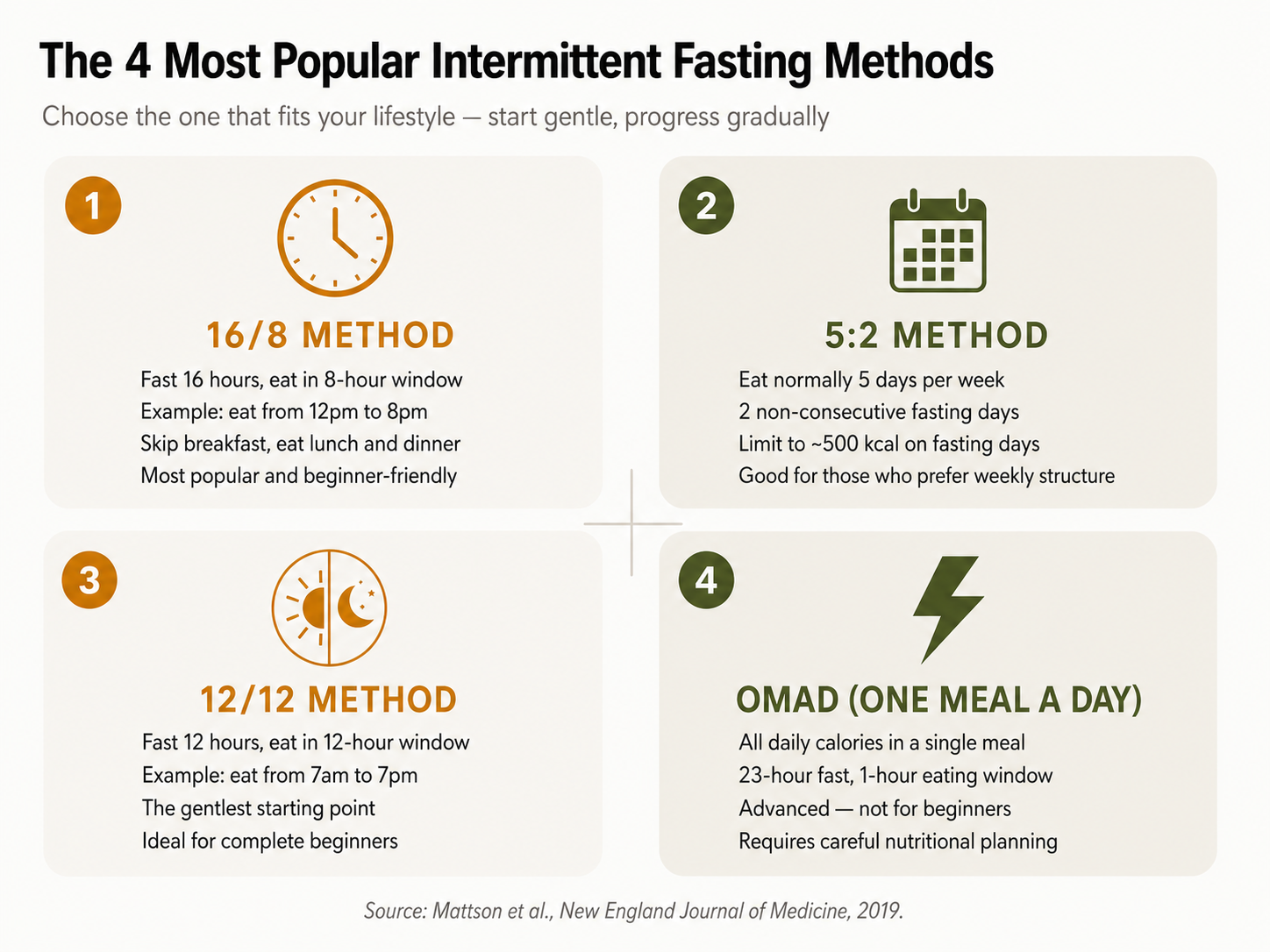
The 16/8 method is by far the most widespread: you fast for 16 hours and eat during the remaining 8 hours of the day. In practice, many people simply skip breakfast and eat between noon and eight in the evening. The 5:2 method suggests eating normally five days a week and drastically reducing intake on the other two (to about 500 calories). The 12/12 is the ideal entry point for those who want to start gently, as it simply involves not eating for 12 consecutive hours, something many already do without realizing it. And OMAD (one meal a day) is the most extreme option and requires prior experience and supervision.
Why is everyone talking about it?
The popular interest in intermittent fasting didn't come out of nowhere. Several lines of scientific research published in the last two decades have shown promising results, which has boosted its media popularity.

Among the most documented benefits are improved insulin sensitivity (which facilitates blood sugar control), reduction in body weight when accompanied by a balanced diet, and certain markers of cardiovascular health. Furthermore, by simplifying the number of meals per day, many people report finding it easier to control total calories without having to count every gram.
But it's not all good news. Intermittent fasting is not magic, and its effects depend enormously on what is eaten during the allowed hours. Binging on ultra-processed foods during the eating window will not produce the same results as making nutritious choices. Nor is it suitable for everyone: people with diabetes, eating disorders, pregnant women, or those with certain medical conditions should consult a professional before trying it.
Calorie-restricted eating regimens, including intermittent fasting, can improve multiple indicators of metabolic health. However, long-term adherence and the quality of the diet during eating periods are determining factors in the observed outcomes.
Is it for you? Some signs to consider
Intermittent fasting might fit well with your lifestyle if, for example, you naturally aren't hungry in the mornings, if your schedule makes it difficult to eat at regular times during the day, or if you're looking for a way to simplify your relationship with food without having to follow complicated plans.
Conversely, it might not be the best option if you tend to obsess over meal times, if hunger causes intense irritability or difficulty concentrating, or if you practice high-intensity sports at times that complicate your eating window.
The key is to start slowly. The 12/12 method is a gentle starting point that allows the body to get used to it without stress. If after a few weeks you feel good, you can try extending the fasting window to 14 or 16 hours. If at any point you feel exhausted, irritable, or notice that your relationship with food is worsening, it's a sign that this specific method is not the most suitable for you, and it's worth adjusting it or consulting a dietitian.
Conclusion
Intermittent fasting is neither a passing fad nor a miracle solution. It is a tool that, for some people, offers a different and sustainable way to organize their eating, with growing scientific support in areas such as weight management and metabolic health. But like any tool, it works much better when used consciously, informed, and adapted to each individual.
If you're curious, the best first step is to inform yourself well, start gradually, and listen to how your body responds. There's no need to follow the strictest protocol from day one: small, sustained changes over time produce better results than grand gestures that don't last. And if at any point you have doubts, there will always be a nutrition professional willing to help you find the approach that works best for you.