Every time you sit down to eat, you are making a medical decision. It might sound exaggerated, but science has been accumulating evidence for decades pointing in that direction: food not only influences your weight, but also the expression of your genes, the level of inflammation in your tissues, and the risk of suffering from—or reversing—some of the most common diseases of the 21st century. The concept of food as medicine has ceased to be a wellness phrase and has become one of the most supported approaches by current clinical research. In 2026, experts place it among the paradigms that are redefining global public health.
Beyond Calories: Food as a Signal
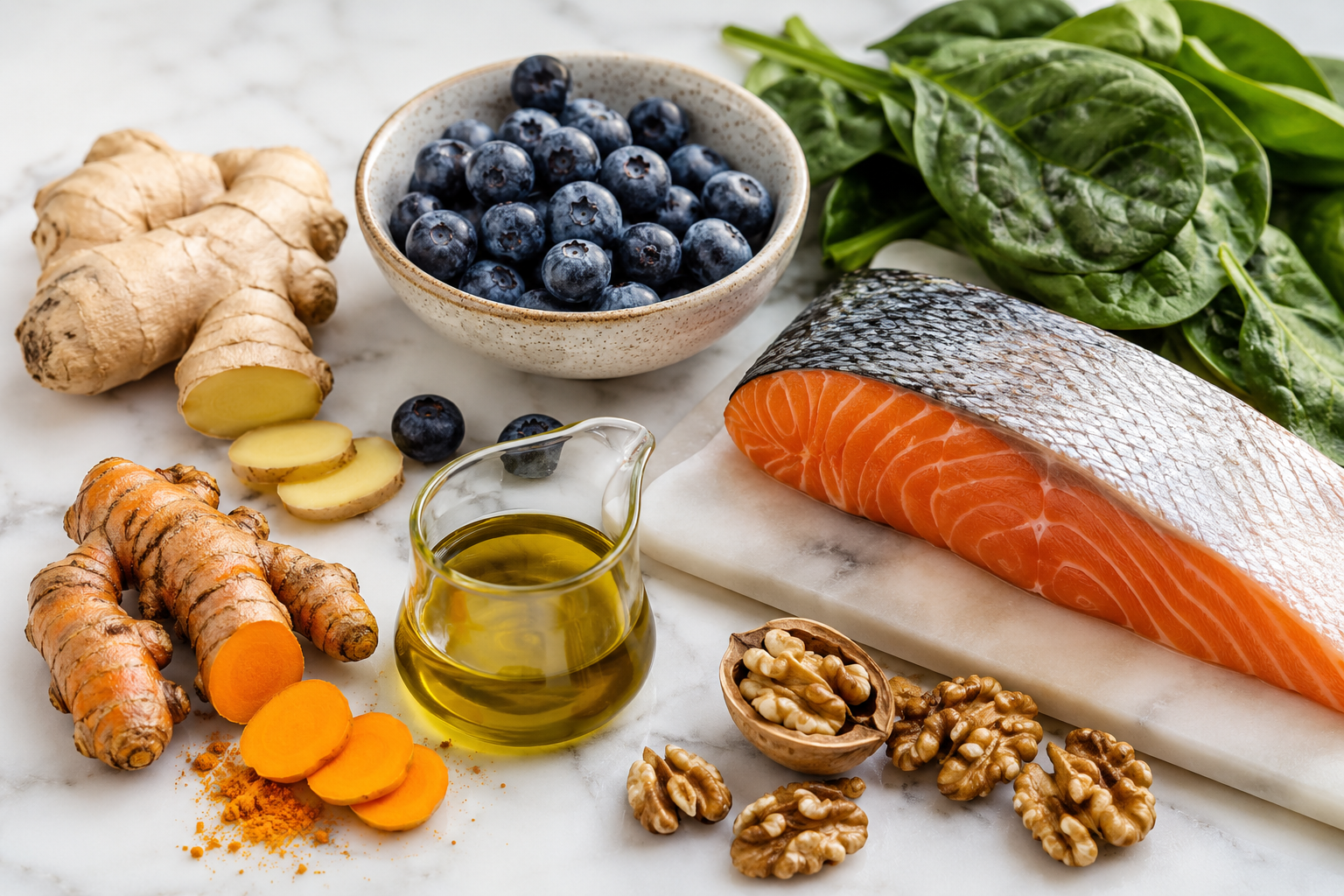
For decades, nutrition was studied almost exclusively from an energy perspective: how many calories go in, how many go out. But today we know that's just the surface. Foods contain thousands of bioactive compounds—polyphenols, phytochemicals, essential fatty acids, fermentable fiber—that act as signals which the body interprets and responds to in very specific ways. A handful of blueberries isn't just sugar and water: it contains anthocyanins that modulate inflammation and protect neurons. Extra virgin olive oil isn't just fat: its oleocanthals block the same target enzymes as ibuprofen. The difference is that instead of a synthetic molecule, food offers hundreds of compounds working in a network, with a complexity that no laboratory has managed to replicate.
This molecular richness is exactly what makes food so powerful—and so difficult to study with the same methods we use for pharmaceuticals.
What Science Says: Real Evidence, Not Trends
The PREDIMED trial—one of the largest nutritional studies in the world, with over 7,000 participants in Spain—showed that a Mediterranean diet rich in olive oil and nuts reduced major cardiovascular events by 30% compared to a low-fat diet. It wasn't a supplement or a drug: it was a complete dietary pattern that made the difference.
But perhaps the most impactful data comes from the Diabetes Prevention Program, a clinical trial published in the New England Journal of Medicine with over 3,000 participants with prediabetes. The results changed the way medicine views diet forever.
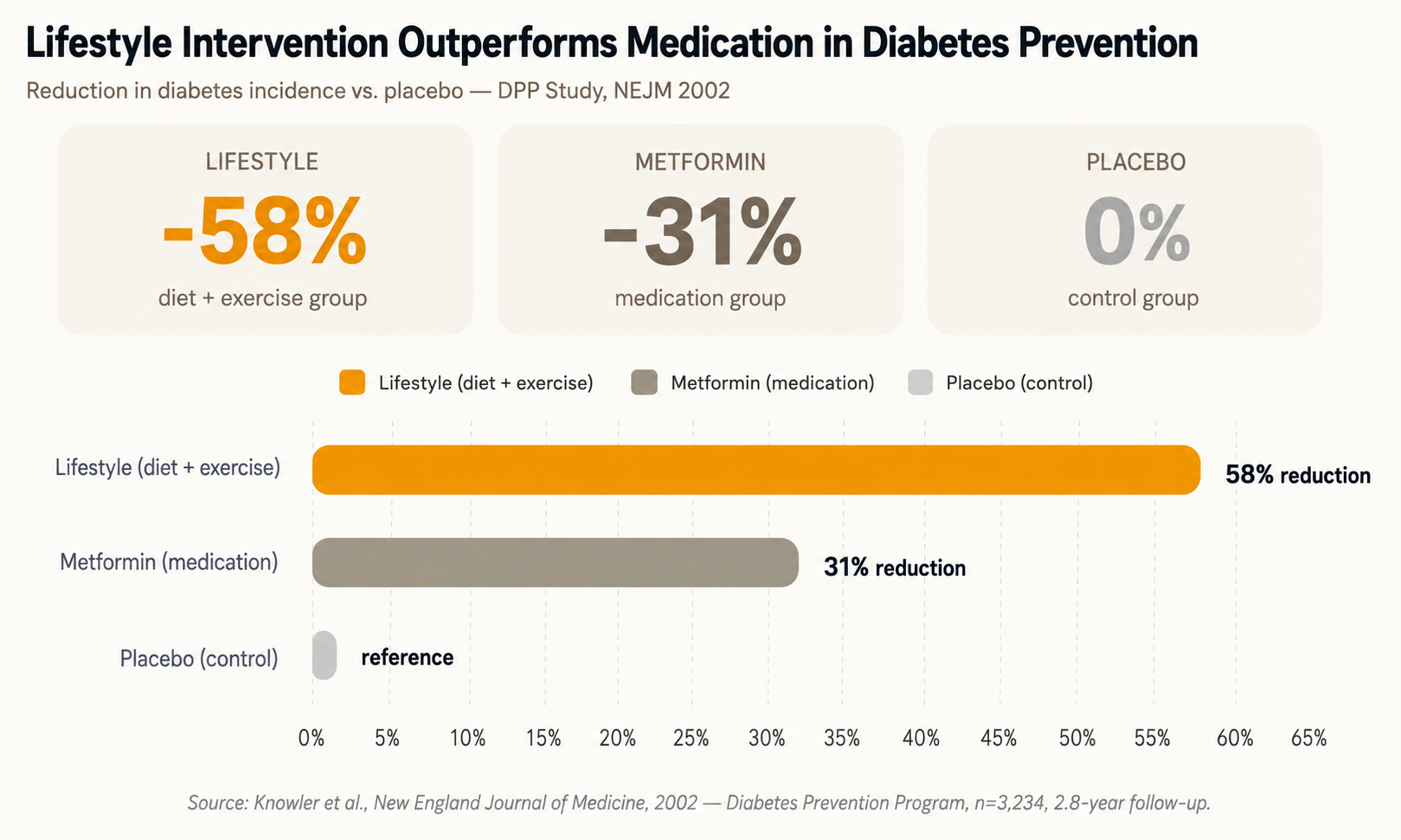
The group that adopted changes in their diet and physical activity reduced their risk of developing type 2 diabetes by 58%. The group that took metformin—the reference drug—reduced it by 31%. Diet outperformed medication.
What we eat is one of the most powerful determinants of our long-term health. Decades of accumulated evidence show that healthy dietary patterns can prevent most chronic diseases, and that this protective potential frequently surpasses that of pharmacological interventions.
Which Diseases Respond to Diet

We're not talking about common colds or minor discomforts. The diseases that research directly links to diet are among the most prevalent and costly for healthcare systems: cardiovascular disease, type 2 diabetes, high blood pressure, certain types of colorectal and breast cancer, non-alcoholic fatty liver disease, inflammatory bowel disorders, and age-related cognitive decline. In all these cases, evidence indicates that overall dietary patterns—not isolated nutrients—are what determine risk. A diet rich in ultra-processed foods, added sugars, and saturated fats consistently activates chronic inflammation pathways that are the common denominator of practically all these conditions. Conversely, patterns based on varied plant foods, quality fats, and fermentable fiber act as a metabolic firewall that the body appreciates cell by cell.
How to Start: Practical Principles
Adopting food as medicine does not require restrictive diets or eliminating entire food groups. The principles consistently supported by science are surprisingly simple: prioritize plant-based foods at every meal, minimize ultra-processed foods, include quality fats like extra virgin olive oil or nuts, and ensure each dish has enough fiber. Consistency matters more than perfection. A consistent dietary pattern over months and years generates measurable changes in biomarkers for inflammation, fasting glucose, LDL cholesterol, and blood pressure. And tracking what you eat —honestly and without obsession— is the most effective tool to make visible what usually goes unnoticed.
Conclusion
The idea that food can be medicine is not new —Hippocrates formulated it 2,500 years ago—, but today we have something he never had: the evidence to prove it with molecular precision. Every meal is an opportunity to reduce inflammation, stabilize glucose, nourish the microbiome, and protect the heart. It's not about eating perfectly, but about ensuring the general direction of your diet systematically points towards health. The first, and most revealing, step is simply to clearly see what you are eating. From there, each decision can be a little more conscious, a little more therapeutic, a little more yours.