It's three in the afternoon, and you can't help it: your eyelids feel heavy, your concentration slips away, and all you crave is a coffee or something sweet. If this sounds familiar, it's very likely not accumulated tiredness or lack of willpower: it's your glucose on a rollercoaster ride. The good news is that with a few adjustments to what you eat—and the order in which you eat it—you can have much more consistent energy throughout the day, without needing to resort to stimulants or go hungry.
What Happens Inside You When Glucose Rises and Falls
Every time you eat a carbohydrate-rich food, your body converts it into glucose, which enters your bloodstream to fuel your cells and brain. The problem isn't glucose itself—it's essential—but rather the speed at which it rises. When that rise is sharp, your pancreas releases a rapid surge of insulin to compensate. Insulin does its job so well that, within minutes, glucose plummets. And that's when the crash appears: fatigue, bad mood, sudden hunger, and irresistible cravings for a snack.
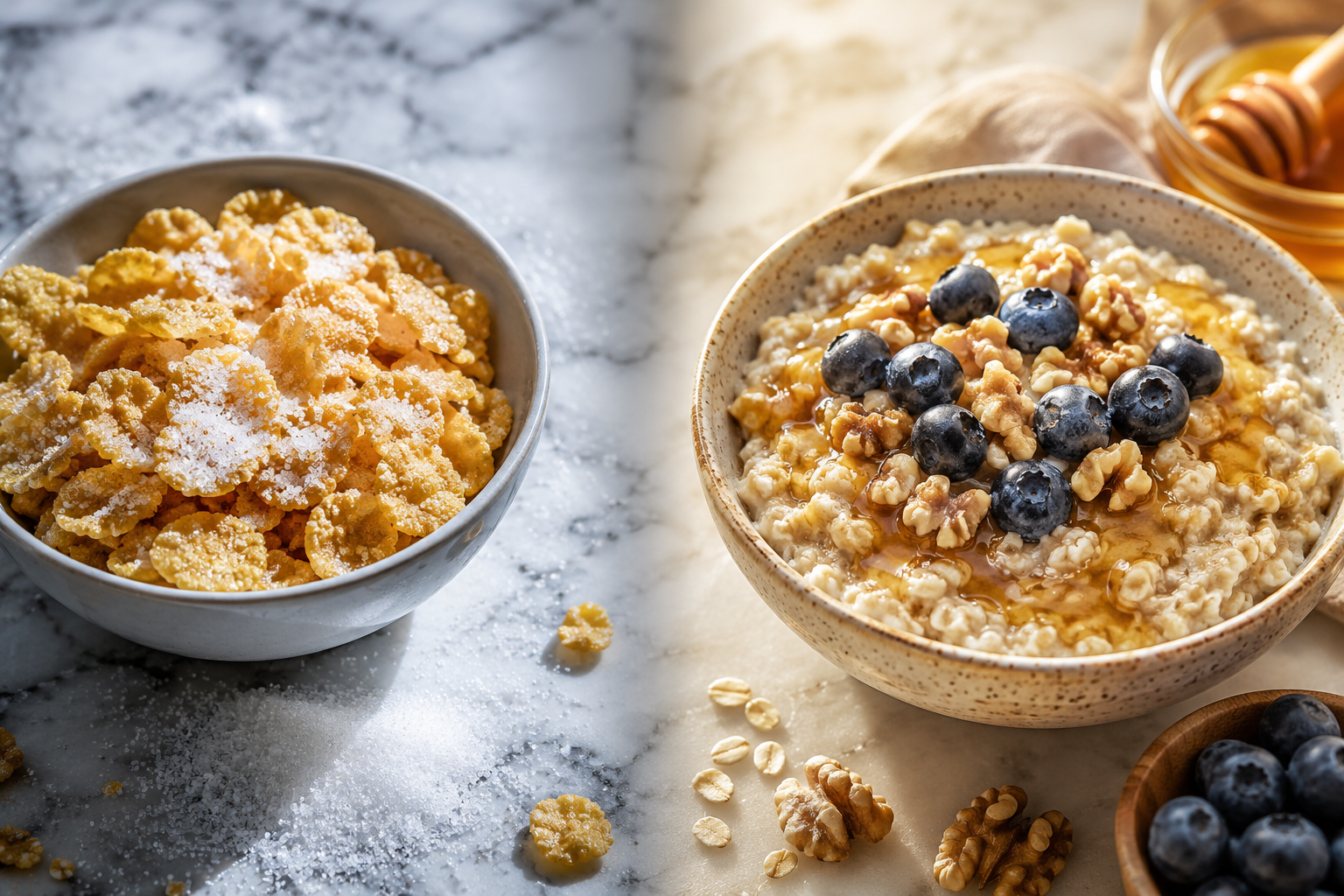
This cycle of rising and falling doesn't just affect your mental performance. Repeated over the years, it contributes to weight gain, insulin resistance, and an increased risk of developing type 2 diabetes. But you don't have to wait for a health problem to pay attention: frequent glucose spikes are noticeable in your daily life, in your energy, your mood, and your relationship with food. When you understand what happens to your body after eating, you start making very different decisions at the supermarket and in the kitchen.
Foods that stabilize glucose (and those that spike it)
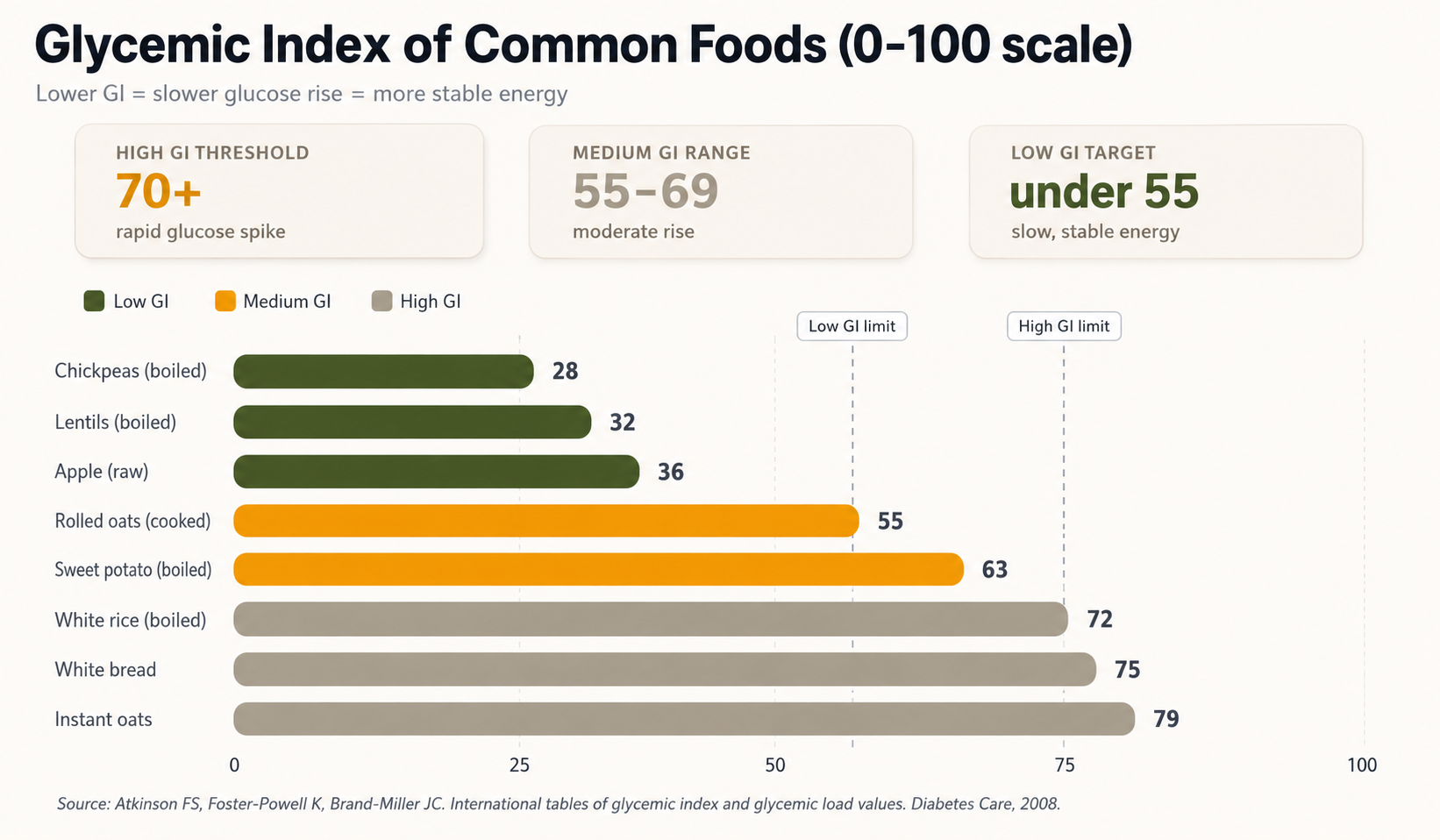
Not all carbohydrates are created equal. The glycemic index (GI) is a scale from 0 to 100 that measures how quickly a food raises blood glucose compared to pure glucose. A low GI (below 55) means a slow and gentle rise; a high one (above 70) implies a rapid peak followed by the inevitable crash.
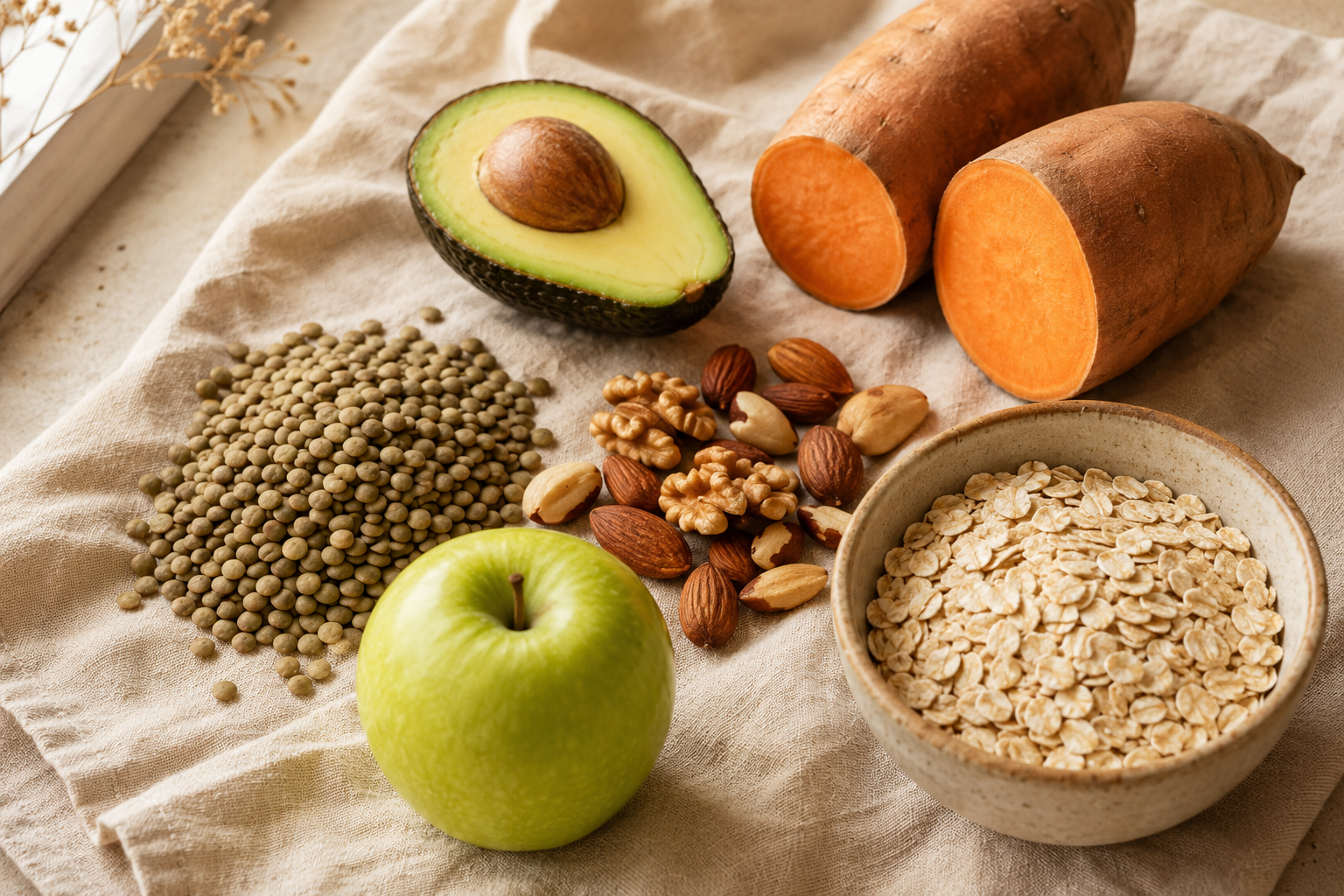
The foods that behave worst in this regard are ultra-processed ones —white sliced bread, pastries, sugary cereals, soft drinks— and also some that we usually consider "healthy" but are digested very quickly in their processed form, such as cooked white rice or french fries. At the other extreme are the great stabilizers: legumes (lentils, chickpeas, beans), nuts, rolled oats, starchy vegetables like sweet potatoes, and most whole fruits. The common denominator of all of them is fiber: it slows down digestion and makes glucose enter the bloodstream progressively, like a ramp instead of a trampoline.
Protein and healthy fats also play a fundamental role. Including them in every meal —an egg, fresh cheese, olive oil, avocado— buffers the glycemic response of the rest of the dish. It's not about eliminating carbohydrates, but about not eating them alone.
The order in which you eat matters more than you think
Here comes one of the most surprising findings from recent glucose research: the order in which you ingest the different components of a meal can reduce the glycemic peak by up to 73%, even if the dish is exactly the same.
The key is to start with fiber and protein before getting to carbohydrates. If you begin your meal with a salad, some vegetables, or some protein (chicken, egg, cheese), you are putting a kind of "cushion" in your intestine that slows down the absorption of the carbohydrates that will come later. Bread, rice, or pasta at the end, not at the beginning.
The quality and composition of carbohydrates matter as much as the quantity. Fast-digesting carbohydrates generate insulin spikes that, paradoxically, can increase hunger and long-term fat storage.
Other evidence-backed tricks that make a real difference: adding a splash of vinegar or lemon juice to your dish (acid slows down starch digestion), finishing your meal with whole fruit instead of juice, and not skipping breakfast if your glucose tends to spike mid-morning.
How to know if your glucose is stable (without needing a meter)
You don't need a continuous glucose monitor to start understanding your patterns. Your own body gives you very clear signals: if you're very hungry again two hours after eating, if the mid-afternoon slump is common, if you need coffee or something sweet to function after eating, or if you struggle to concentrate while fasting, your meals are probably causing pronounced ups and downs.
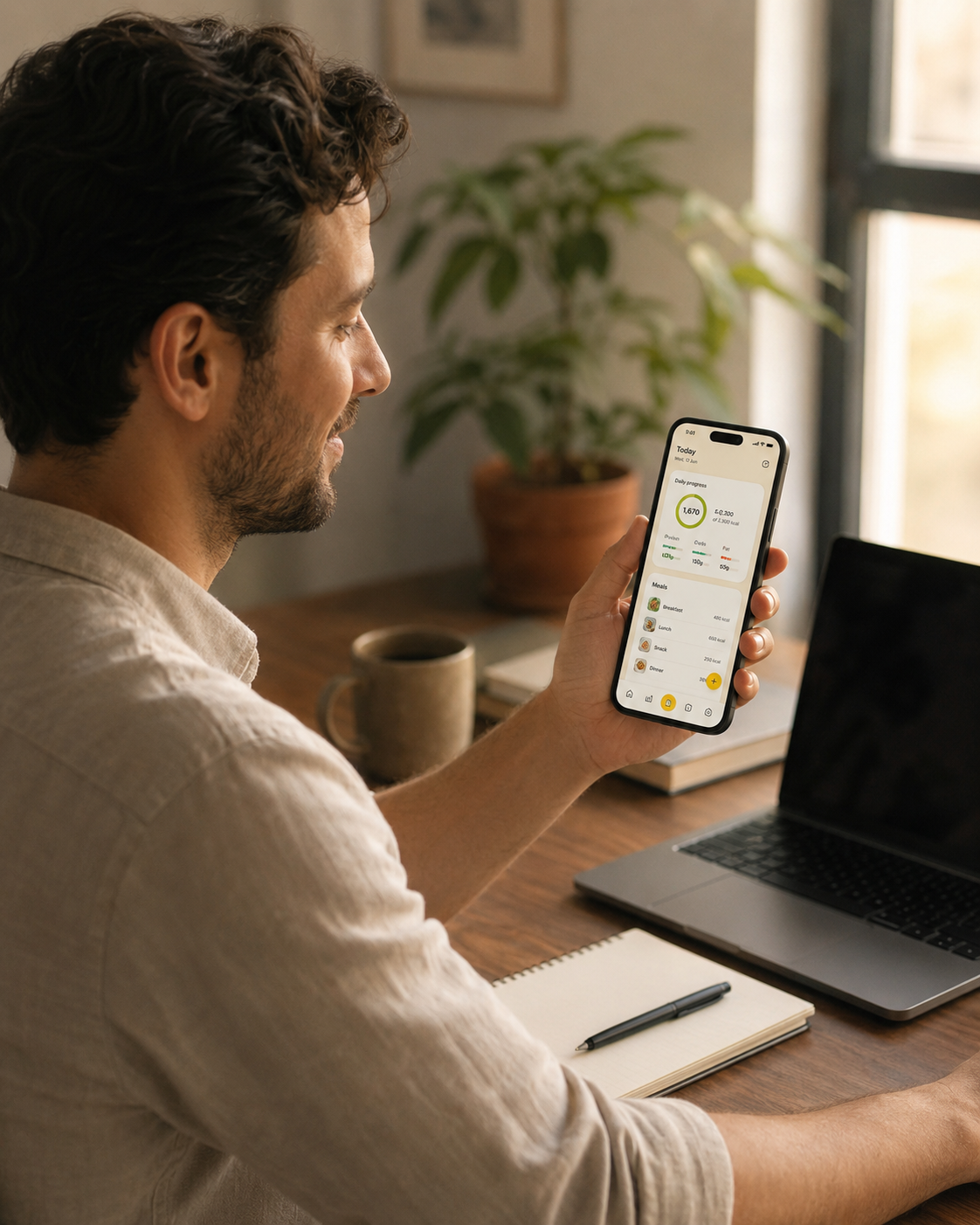
Keeping a log of your meals for a few days —what you ate, at what time, and how you felt afterward— is one of the most powerful tools to identify foods that spike your glucose. You don't need to be exhaustive: just noting the main things will start to reveal patterns that were previously invisible. Do you always experience a slump when breakfast was just fruit and toast? On the day you eat legumes for lunch, do you arrive at dinner without hunger? This information, accumulated over a few days, is worth more than any generic advice.
This is where an app like Calegg can make a real difference: by photographing your dishes and seeing their nutritional profile, you start to understand how loaded with simple carbohydrates your meals are without realizing it. Sometimes what seems like a balanced dish has twice the carbs you expected, and that perfectly explains why that afternoon was so tough.
Conclusion
Keeping glucose stable is not a restrictive diet or a passing fad: it's learning to give your body what it needs, at the pace it needs it. The changes are small —more fiber, protein in every meal, starting with vegetables, avoiding ultra-processed foods on their own— but the impact on your energy, concentration, and mood can be enormous and noticeable from the very first days. It's not about obsessing over numbers, but about understanding your own patterns. Your body is already giving you clues; you just have to learn to listen to them.