There's a nutrient that appears in all 2026 health reports, that doctors have been recommending for decades, and yet almost none of us consume enough of it. It's not some exotic vitamin or a trendy supplement: it's fiber. Simple, accessible, and present in many foods you already know, fiber is perhaps the great forgotten nutrient of modern nutrition. And yet, its impact on how you feel every day is enormous.
What is Fiber and Why Does Your Body Need It So Much?
Fiber is a type of carbohydrate that the human body cannot digest. Unlike sugars or starch, it passes through the stomach and small intestine practically intact until it reaches the colon, where it does much of its work. And precisely because of this —because it doesn't break down— it is so valuable.
There are two main types, and it's worth knowing both because they act in very different ways.
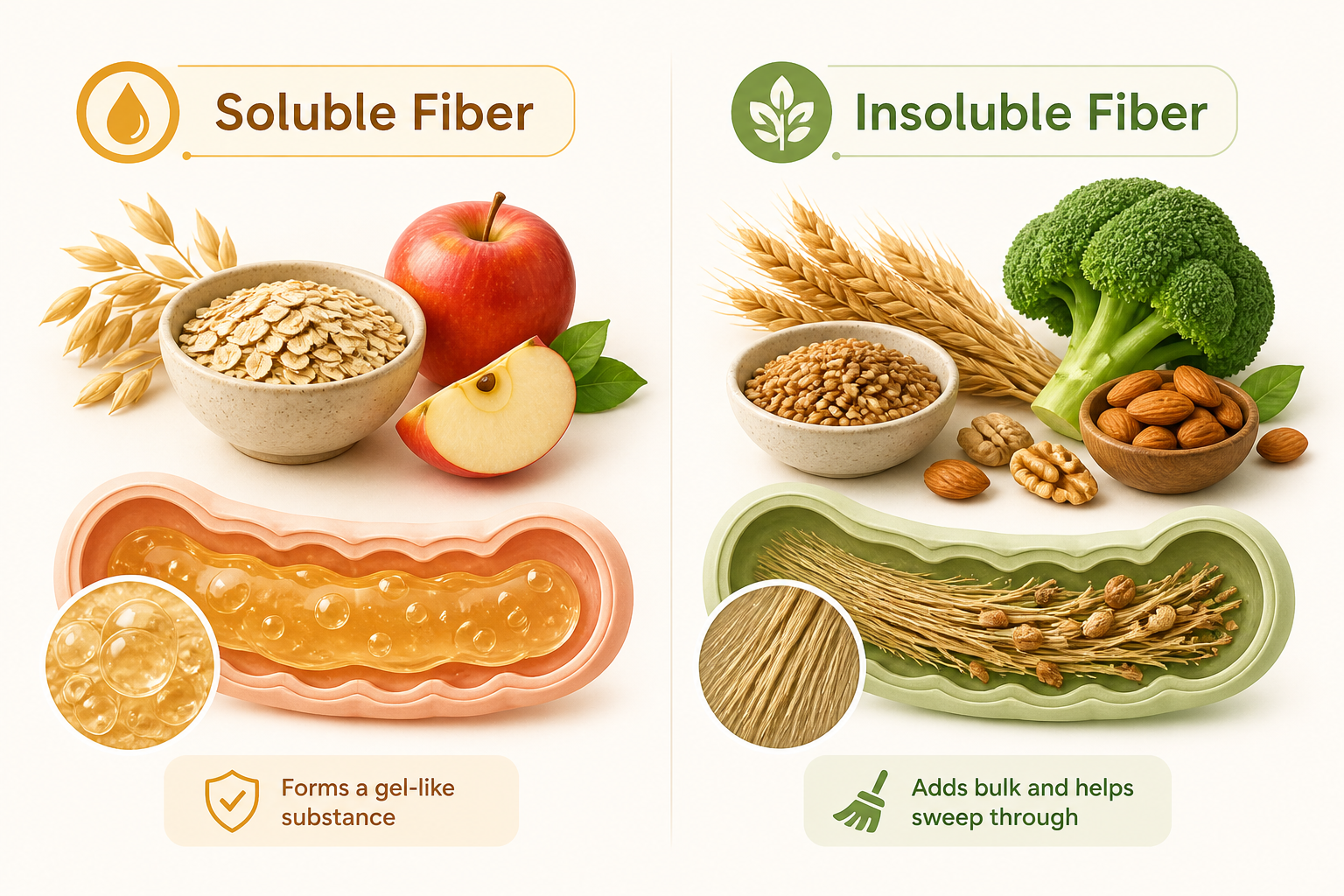
Soluble fiber dissolves in water and forms a kind of gel in the intestine. This gel slows down digestion, which helps stabilize blood sugar levels and reduce cholesterol. You find it in oats, apples, lentils, and chia seeds. It is also the favorite food of the beneficial bacteria in your gut microbiota.
Insoluble fiber, on the other hand, does not dissolve. It acts more like a broom sweeping through the intestine, adding bulk to stools and speeding up intestinal transit. It is responsible for regular bowel movements. It is abundant in whole grains, bran, broccoli, and nuts.
A varied, vegetable-rich diet provides both types naturally. The problem is that most of us don't follow such a diet.
The Problem: Almost No One Reaches 25 Grams Daily
The official recommendation is clear: between 25 and 30 grams of fiber per day for an adult, and up to 38 grams for men with high physical activity. The reality, however, is very different. Studies show that the actual average consumption is around 15 grams per day — barely half of what is recommended.
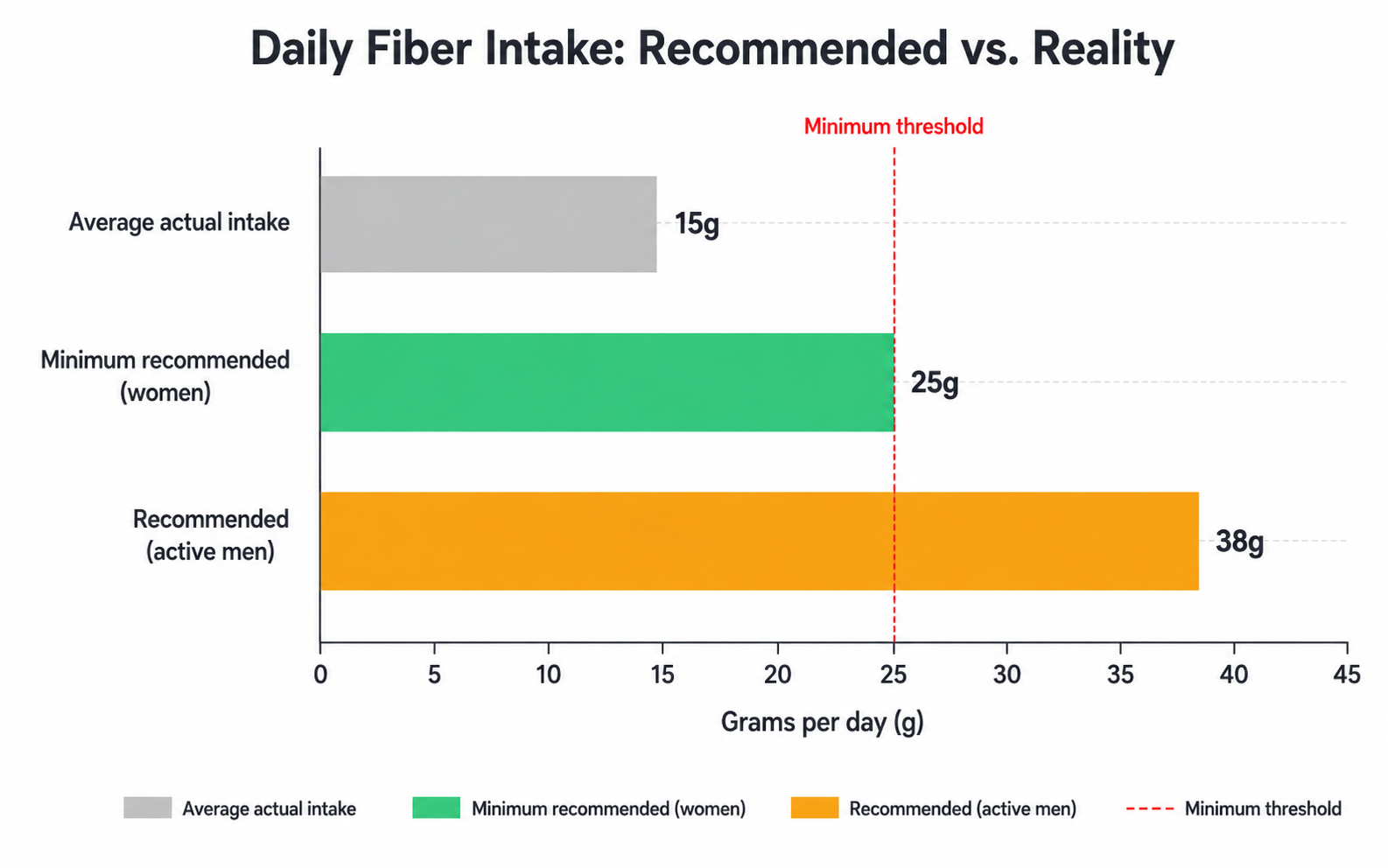
How does this deficit occur? The answer lies in the type of diet that dominates our daily lives: white bread instead of whole wheat, juices instead of whole fruit, processed snacks instead of nuts, and little presence of legumes and vegetables on the plate. It's not that fiber is difficult to obtain — it's that the modern food environment has gradually displaced it without us hardly noticing.
What Fiber Does for Your Body (Beyond the Bathroom)
When people think of fiber, the first thing that comes to mind is bowel movements. And yes, fiber helps with that. But stopping there is only getting part of the story.

Soluble fiber feeds the beneficial bacteria in your microbiota — that ecosystem of billions of microorganisms living in your gut that influence your immune system, your mood, your metabolism, and even your ability to concentrate. When you eat fiber, these bacteria ferment it and produce compounds called short-chain fatty acids, which have documented anti-inflammatory effects in multiple studies.
Furthermore, fiber helps stabilize blood glucose levels by slowing down the absorption of sugars. This translates into fewer energy spikes and more stability throughout the day — that post-meal rush and mid-afternoon slump are closely related to a low-fiber diet. As if that weren't enough, fiber helps reduce LDL cholesterol, control appetite (because it increases the feeling of fullness), and is associated with a lower risk of type 2 diabetes, cardiovascular diseases, and colorectal cancer.
The best fiber-rich foods you can add today
The good news is that you don't need to buy any supplements or follow a special diet. Fiber is found in everyday, affordable, and delicious foods. These are the groups that contribute the most:
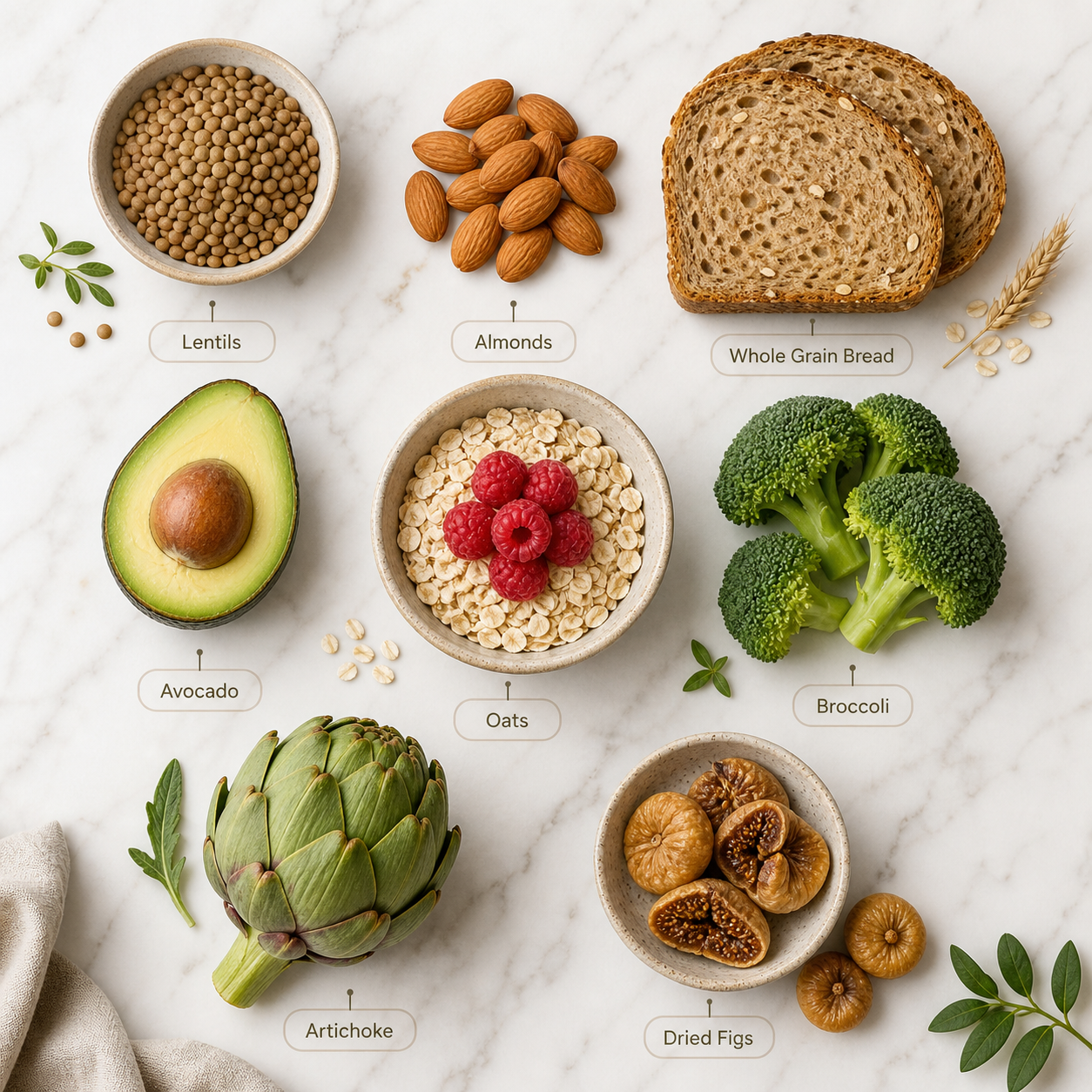
Legumes — The absolute champions. A plate of cooked lentils or chickpeas can provide between 12 and 16 grams of fiber. Additionally, they combine plant protein with a low glycemic index, making them one of the most complete foods available. Black beans, green lentils, chickpeas, edamame: they all add up.
Whole Grains — Oats, whole wheat bread, brown rice, and quinoa contain between 3 and 6 grams per serving. The trick is that they must be truly whole grain, not just "brown in color." Check that the first ingredient on the label is whole flour, not enriched refined flour.
Whole Fruits and Vegetables — Whole fruit provides fiber; juice does not. A pear with skin has about 5 grams; a glass of pear juice, practically zero. Avocado, artichoke, raspberries, and broccoli are especially rich. In general, the more diverse the color of the plate, the more types of fiber you are consuming.
Nuts and Seeds — Almonds, walnuts, flax seeds, chia, or pumpkin seeds. A handful of almonds adds about 3.5 grams of fiber. Chia seeds are extraordinary: two tablespoons provide almost 10 grams.
Increase your fiber without your digestion protesting
If your current diet is low in fiber and you suddenly multiply the amount, you're likely to notice gas, bloating, or discomfort. This is completely normal: your microbiota needs time to adapt to the change.
The key is to increase fiber gradually, distributing it among different meals throughout the day instead of concentrating it in a single one. And, just as important: drink enough water. Fiber needs liquid to do its job well — without adequate hydration, it can have the opposite effect of what is desired.
Start by making one or two simple substitutions this week: white bread for whole wheat, white rice for brown rice, or a serving of whole fruit instead of juice. A radical change is not necessary. Consistency in small actions is what ultimately makes the difference.
And if you want to know exactly how much fiber you are actually eating, photographing your dishes with NutrIA is the fastest way to find out without having to look up tables or do calculations: the app analyzes the nutritional content instantly, fiber included.
Conclusion
Fiber is not a complicated concept or a nutrient exclusive to special diets. It's in the bread you choose, in the fruit you have for dessert, in Tuesday's lentil dish. The problem is not that it's hard to find, but that modern eating has relegated it to the background.
Reaching 25-30 grams daily doesn't require supplements or sacrifices: it requires including more legumes, more whole grains, and more whole fruit and vegetables in your daily life. The benefits — from better digestion to a healthier microbiota, fewer glucose spikes, and greater satiety — are noticeable relatively quickly. Sometimes, the simplest changes have the biggest impact.