Stepping on the scale and seeing a number no longer tells the whole story. Today's smart scales go far beyond just weight: they estimate your body fat percentage, muscle mass, hydration level, and even bone mass, all in a matter of seconds. But do you really know what each of those figures means? And when to trust them and when to take them with caution? Understanding this data—and learning to connect it with your diet—can completely transform how you interpret your progress.
What Exactly Does a Smart Scale Measure?
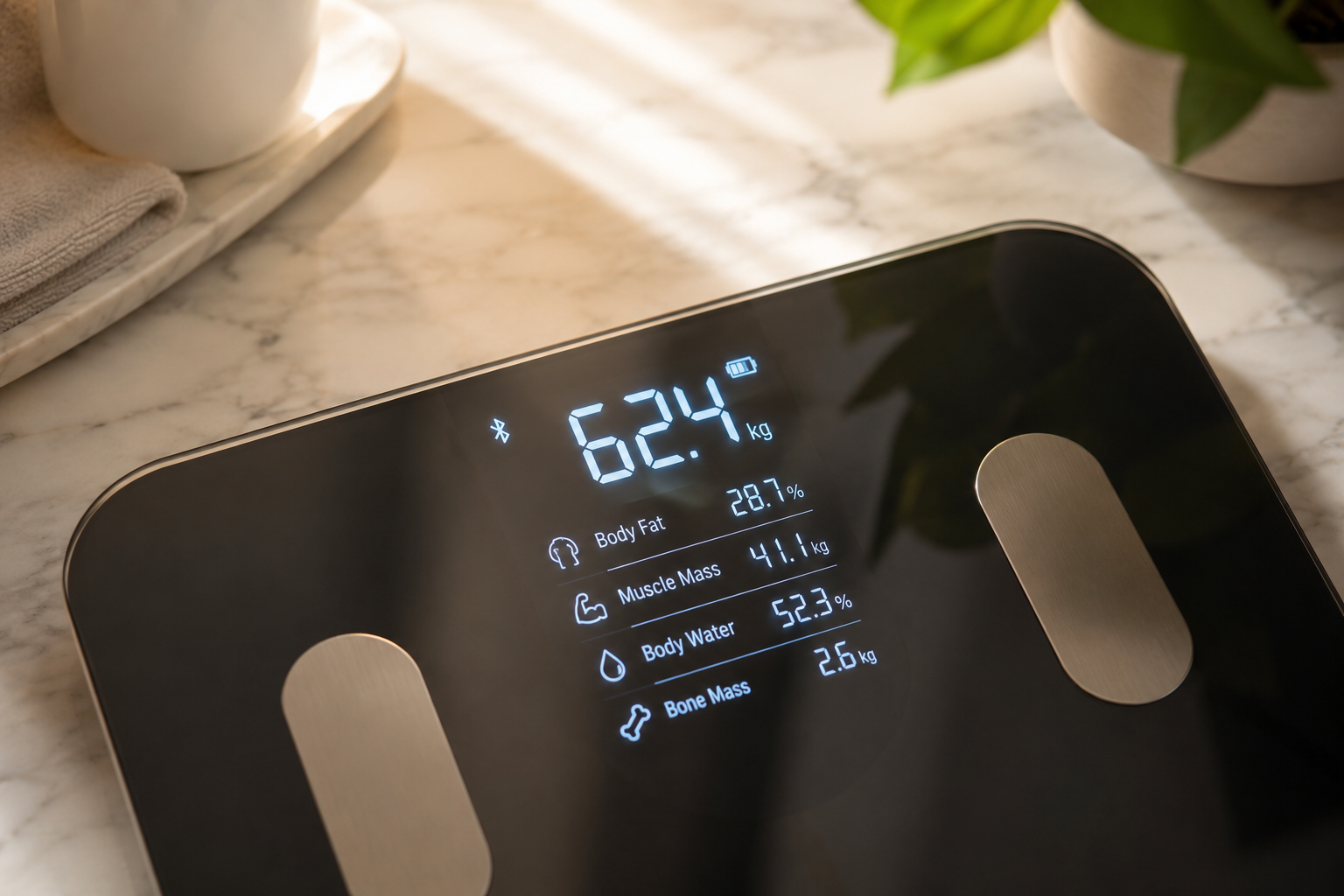
Unlike a conventional scale, smart models break down your body into several compartments. The most well-known metric is body fat percentage, which indicates what proportion of your total weight corresponds to adipose tissue. Alongside it appears muscle mass (or fat-free mass), which groups muscles, organs, bones, and water. Another common figure is body water percentage, which in healthy adults usually ranges between 45% and 65% of total weight, depending on age and sex. Some more advanced scales also estimate bone mass and visceral fat, which is the adipose tissue accumulated around internal organs and is most associated with metabolic risks.
The secret is that none of these figures, viewed in isolation, tells the whole story. What's truly valuable is observing how they evolve together over time.
How Bioimpedance Works: The Invisible Brain of Your Scale
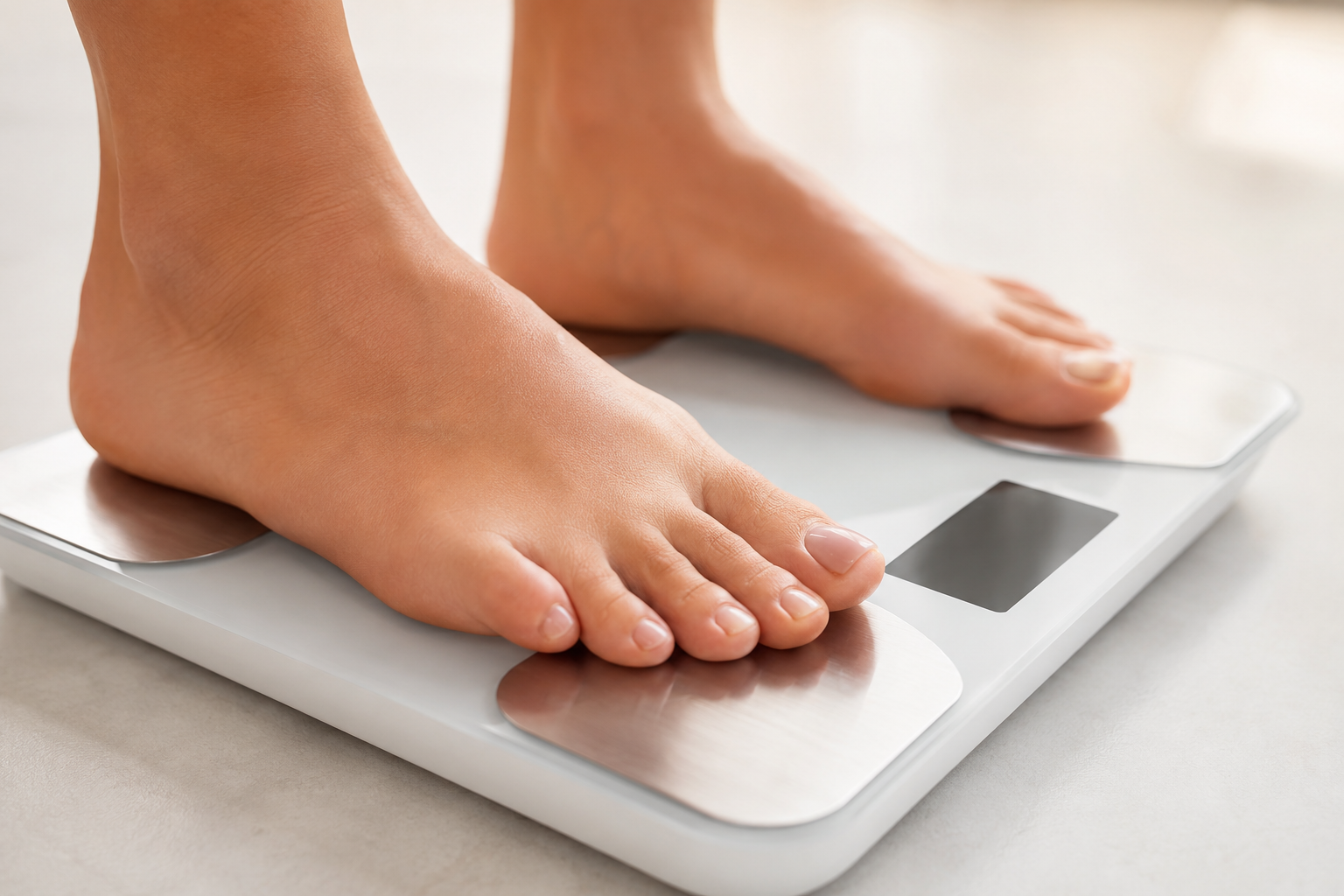
The technology behind your smart scale is called bioelectrical impedance analysis (BIA). Its operation is elegant in its simplicity: metal electrodes integrated into the scale's surface emit a very low-intensity electrical current —completely imperceptible to you— that travels through your body. Muscle, having a high water content, conducts electricity easily. Fat, on the other hand, resists the passage of this current. By measuring this resistance, or impedance, the scale applies mathematical formulas to estimate the proportion of each tissue.
The result is an estimation, not a direct measurement. Bioimpedance is convenient and accessible, but it has error margins of between 3% and 8% compared to reference techniques such as dual-energy X-ray absorptiometry (DEXA). This does not make it useless, but rather changes how you should read the data: not as absolute truths, but as trends.
Body Fat Ranges: Where Do You Stand?
A healthy body fat percentage is not the same for everyone. It varies by sex, age, and physical activity level. One of the most widely used clinical classifications is that of the American Council on Exercise (ACE), which divides the population into five categories. Understanding which range you fall into gives you a realistic starting point for setting goals, much more useful than the body mass index (BMI), which does not distinguish muscle from fat.
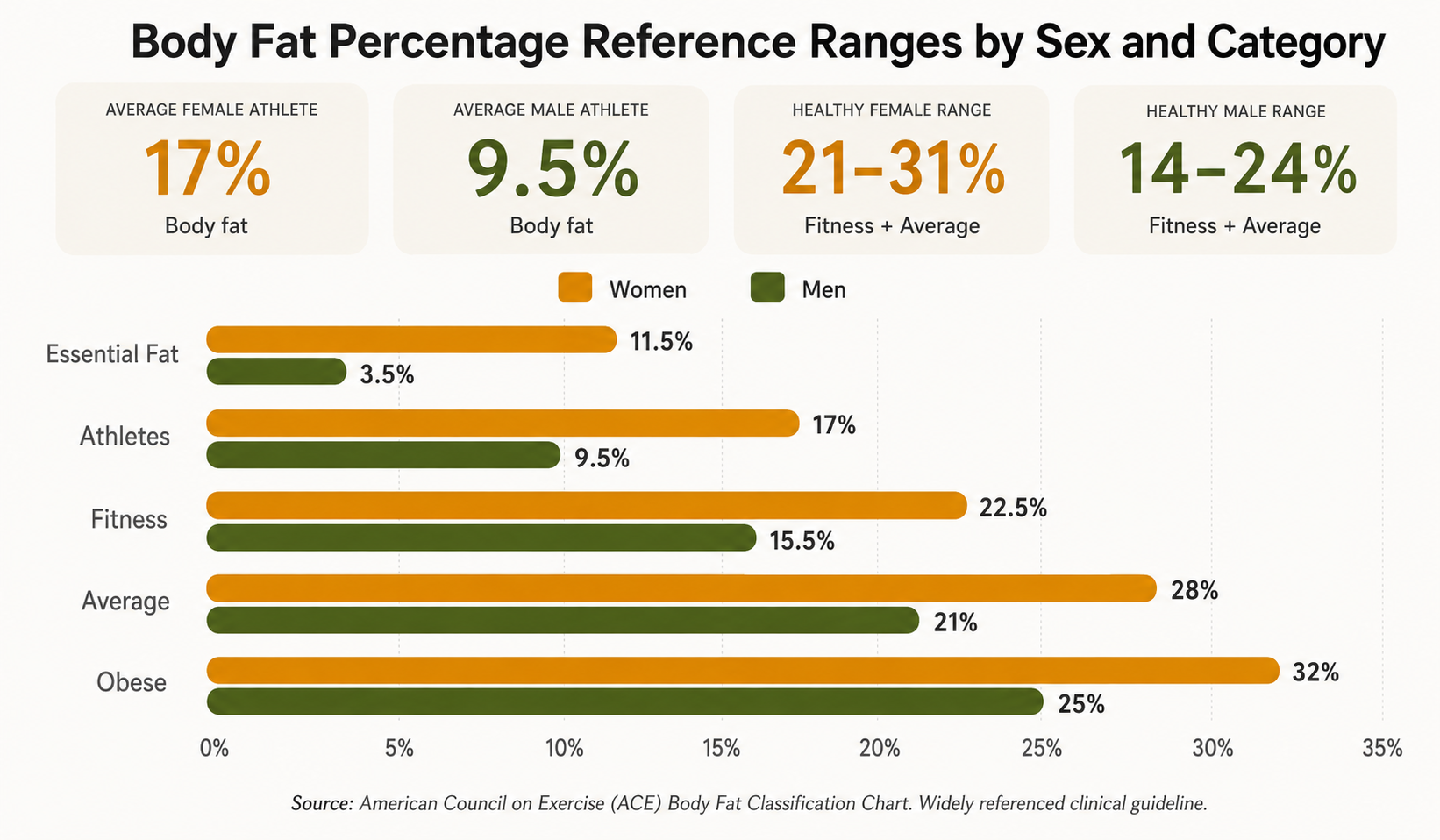
What this classification makes clear is that the same body fat percentage has very different meanings depending on sex. Women need a minimum essential fat of 10–13% simply to maintain basic hormonal functions, while for men, that threshold drops to 2–5%. Pursuing a body fat percentage that is too low without guidance can be as harmful as having it too high.
How to obtain reliable measurements: the protocol that makes the difference
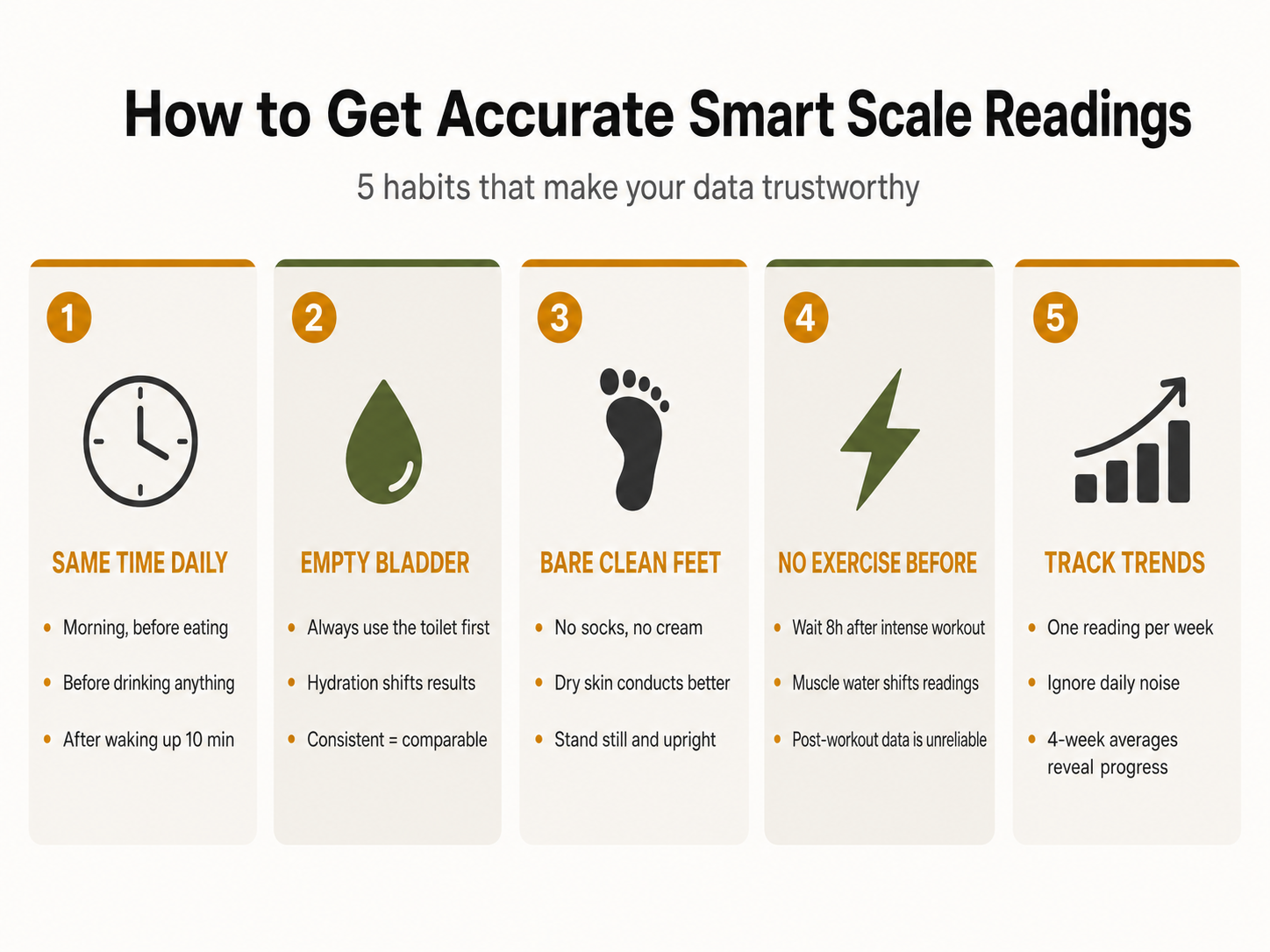
For your smart scale to give you useful and comparable readings week after week, the key lies in the consistency of the measurement protocol. Variations in hydration, digestion, or body temperature can shift your body fat percentage by 2% to 4% on the same day without anything truly changing in your body. Therefore, the number on Tuesday is not as important as the pattern that emerges over weeks.
Connecting these readings with your diet is where the smart scale truly comes into its own. If you log what you eat —proteins, calories, macronutrient distribution— and cross-reference it with the evolution of your muscle mass and body fat, you begin to see relationships that would otherwise be invisible. Are you eating enough protein to preserve muscle while reducing calories? Is your visceral fat decreasing even if your total weight barely moves? These are the questions a well-used smart scale helps you answer.
Conclusion
A smart scale is not a judging machine: it's a tool to understand yourself better. Body fat percentage, muscle mass, and hydration are much more informative windows into what's happening inside your body than weight alone. But its real value isn't in a single day's number, but in the story told by weeks or months of consistent data. Measure yourself under the same conditions, observe the trends, and put it in context with what you eat. When nutritional tracking and body tracking go hand in hand, progress stops being an assumption and becomes something you can see and manage.